
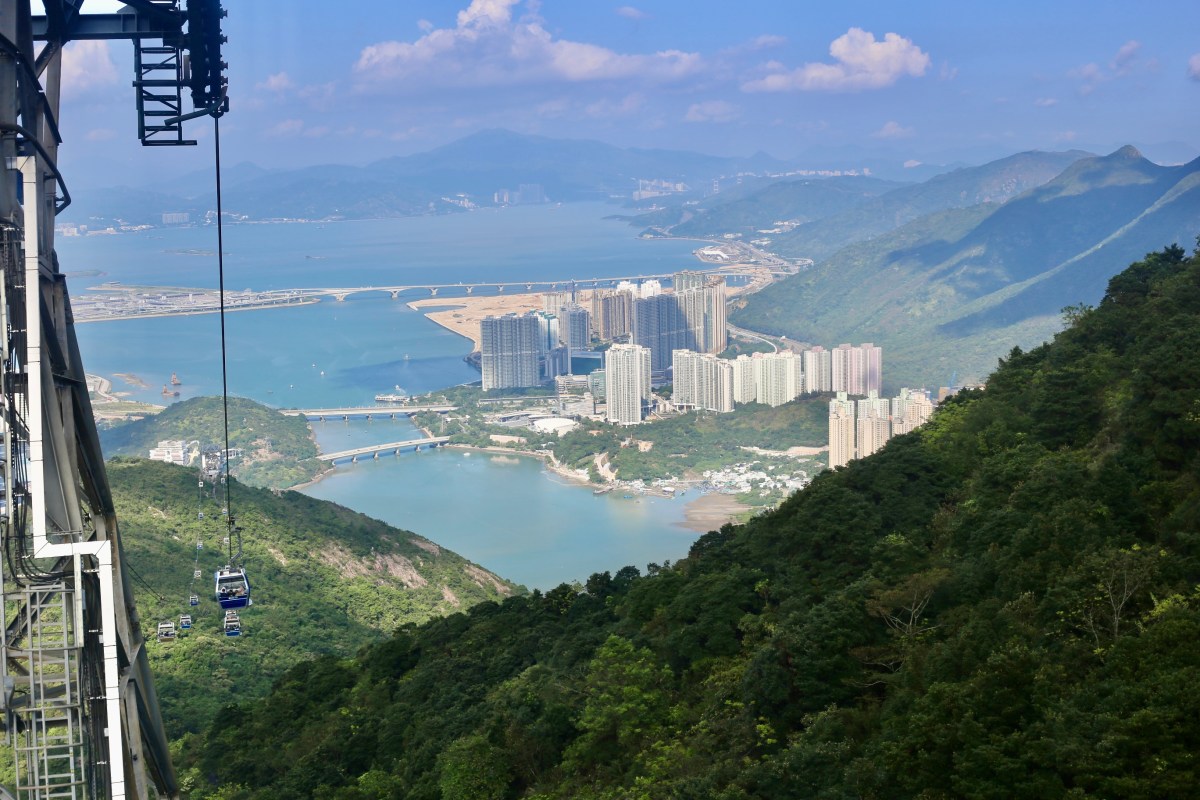
It’s been three months since I came to Hong Kong to attend my postgraduate study at the Hong Kong Polytechnic University. I took Hong Kong’s rail transit MRT from Tai Wei to Hung Hom as part of my daily routine. Because MRT charges a fee for riding a train that uses the cross-harbor undersea tunnel, I rarely went to Hong Kong Island. Only fourth have I gone to the island in the first three months of my study in the Cantonese speaking city. Unlike Hubei where quiet places can be quite easily found, finding a quiet space to get relaxed and calmed down in Hong Kong’s crowded neighborhoods and streets is not easy with rare exceptions for the city’s beautiful countryside parks and remote islands.
Accommodation in Hong Kong is quiet expensive for me, according to Hubei standards, so I rented a bunk bed with a broken bed-board, which caused my quiet a lot of troublesome issues later on and it cost me 3600 HKD a month. The electricity and water charges were also very expensive because I had to pay a rent deposit. My own small writing table was outside in the small living room that measured around 4 to 5 square meters in size and the writing table inside the bedroom belongs to my roommate who owned the top bunk. My roommate swiped on TikTok’s Chinese version, Douyin, and played games with the sound out until around 11:30pm, so I had to go to the university library until 11:00pm to do my homework. In the quiet area of the school library, there were occasional conversations that occasionally seemed to be endless; maybe, this cosmopolitan of around 7 million multicultural residents seemed to be bustling with endless energy and always in high spirits. Seeing the bright green trees outside the window, I reminisced about the seemingly chronic grayish skies of Qianjiang in Hubei, and although it remained an remote city unknown to many people outside, at least I had a room of my own, and was able to take a break and stay quietly alone for a while.
On the subway in Hong Kong, if you are not in a quiet zone, it’s very possible that there is going to be people talking energetically and making a lot of laughters. Yesterday evening, when I was walking from the footbridge of the Hong Kong Polytechnic University to the subway station of Hung Hom, I heard sharp laughters; it seemed to be some female students talking about certain teenage issues. However, I found it hard to get a resting place in the pale lit subway station where people kept coming in and going away. In an interview with the Paris Review (Gobeil, 1965), Beauvoir confessed that she herself was not a good teacher, as a good teacher needs to be attentive to the needs of all students (good and bad), but she confessed that she was only interested in the good ones:
“because I was interested only in the bright students and not at all in the others, whereas a good teacher should be interested in everyone. But if you teach philosophy you can’t help it. There were always four or five students who did all the talking, and the others didn’t care to do anything. I didn’t bother about them very much.”
Like Simone Weil, Beauvoir had once been a philosophy teacher for a while, and it seems that the only practical career path for people in the world of literature today is to become a teacher. Sontag once said that literature is an education for the soul, to let people realize the possibilities of their life and understand what is right, good and evil. However, in today’s world, which seemed like a wilderness, all that seemed to grow out of the ground is high-rise concrete buildings, and people are extremely concerned with money and profit-making. Whenever I returned to my tiny rented apartment, the female guard in the hall always greeted me with smiles, and I was touched and smiled back, saying thank you to her. At that time, I felt a sense of comfort and respect when I was particularly tired. In Qianjiang, these small courtesies have gradually been forgotten, there is more indifference in people’s faces.
One day on the streets of Tai Wei, New Territories, when I arrived at the elevator exit under a footbridge, a delivery man on a bicycle suddenly appeared at the entrance, wearing a helmet and in his mid-fifties, nearly hitting me in the front, he said sorry in with a Cantonese tone, sounding like soli or so; he was a typical thin-figured Hongkonger. “I didn’t at that time get his word so it’s a pity that I didn’t respond to him with a “doesn’t matter”. Hong Kong is a place where many small acts of kindness happen, and that’s what I want to preserve.
