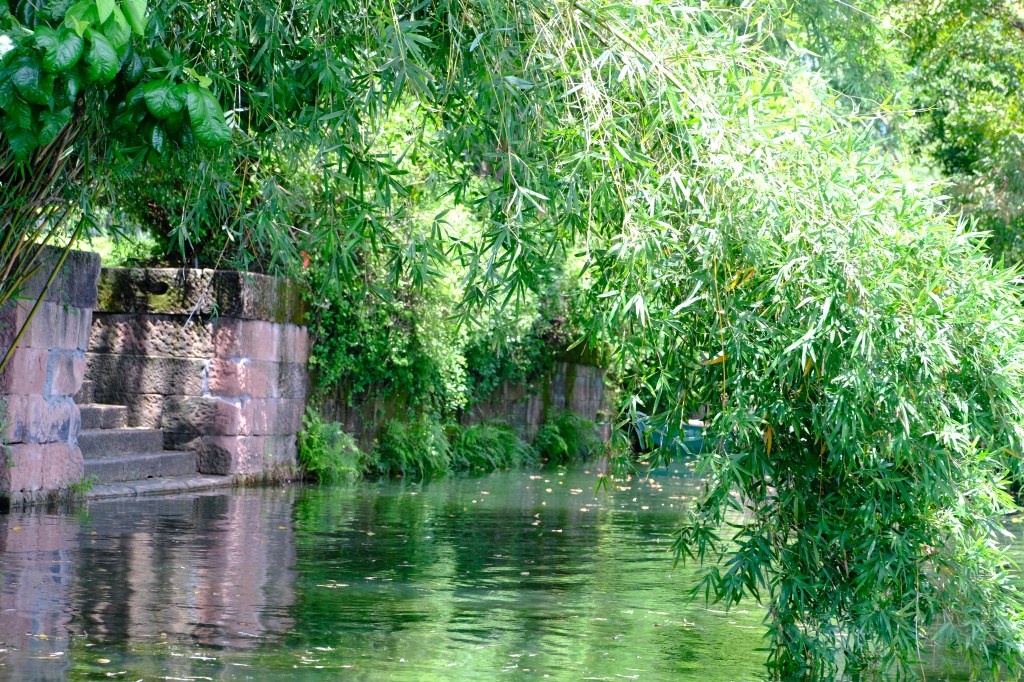
Hangzhou in Photos
These are the places where I have occasionally or long-termly resided: Hongkong, Qianjiang of Hubei, Wuhan, Shenzhen, Eastern China…the list extends as I search for a new inspiration to find meanings in natural writing and living.
the story continues
Xianhua Lou |信箱:letter@loulin.org
Grapefruit Podcast is a show that focuses on personal growth, lifestyles, and everything worth of our intellectual growth. This episode focuses on the uneven flow of information that is often the cuase of wrongful decision-making.
《葡萄柚与生活》一个专注于个人成长与实用洞察的中英双语播客。本期话题是:“打破信息差”,我们怎么才能实实在在地,打破信息差。
信息差,究竟藏在哪?
信息差不是只有金融圈、科技圈才有,其实我们每个人都可能是“被蒙在鼓里的那一个”。以下这三个例子,也许你就会感同身受:
案例1:同样是跳槽,有人拿了30%的涨薪
你在网上海投简历,对方HR甚至不回复;而你的前同事已经通过“内推渠道”直达面试,HR还主动加微信问意向。信息差点一:他知道去哪儿找内推渠道(如内推公众号、行业交流群),你只知道“boss直聘”。
信息差点二:他知道怎么“关键词优化简历”,你还在用毕业时的模板。
案例2:副业搞钱,有人已经悄悄做起咨询服务
有个朋友文笔好,已经通过公众号、知乎专栏接稿子、开写作课,一个月多赚3000;你文笔也不差,但每天刷手机下班累瘫,不知道“自己能靠什么变现”。信息差点一:她知道哪儿有靠谱的写作变现社区(如“灵感胶囊”、“写作营地”),你还以为副业只有摆摊。
信息差点二:她懂得打造“可见作品”,你没有留下任何“别人可以看到的你”。
案例3:升职考核,你被“无声淘汰”
你觉得自己埋头苦干,公司却升了那个“会汇报、懂包装”的同事。其实你不知道,汇报和展示,本身就是职场里的隐性信息竞争。信息差点:他知道“如何做项目总结”“怎么做成果PPT”“怎么向上对齐目标”,你只知道把事做完。
打破信息差的具体做法
信息差不是完全无法克服的,它就像迷雾。你越主动探索、建立系统,它就越被驱散。以下五招,每一招都给你具体可操作的方法和案例:
1. 打破社交壁垒:学会建立“信息互助圈”
怎么做?主动找到与你目标相关的微信群、豆瓣小组、知识星球、线下分享会。不只是“潜水”,而是主动提问、总结、分享资源。
2. 精准提问,才有精准反馈
怎么做?不要问“我该怎么转行”,而要问“我想转行做内容运营,现在掌握了××技能,下一步建议怎么做?”准备背景 + 意图 + 问题,形成结构化提问模板。
工具推荐:《如何提问才有人理你》《提问的艺术》(豆瓣有精简笔记版)
实操案例:阿美在小红书找内容博主请教,不是问“我能做自媒体吗”,而是发了她的笔记图文,并请教选题策略。对方非常愿意给建议,还推荐了配图工具。
3. 建立高效信息输入系统,而不是“瞎刷”
怎么做?
用 RSS 工具(如Feedly、Inoreader)订阅你想关注的行业资讯源;关注3-5个优质公众号/简报,每天10分钟扫一遍;每周花1小时复盘自己“获取到的3条高质量信息”。如何避免信息焦虑?
信息源要少而精;不要全读,学会“标签式扫读”:跳读、收藏、关键词筛选。推荐工具:
4. 建立“输出导向”的工作习惯,倒逼成长
你可以每周发一次小红书、知乎、微博长帖,记录你对某个问题的理解;做“项目型学习”:比如不只学数据分析,而是自己做一个“房价分析可视化”项目;
坚持每周写1份“个人成长周报”,发给信任的朋友/社群反馈。
改掉低效学习的坏习惯:
光收藏不实践 → 每看一篇内容,写一条总结+一个行动;
刷完就算学会 → 做一个输出(帖子/音频/短视频)才算“掌握”;
知识记在脑里 → 搭知识地图 + 笔记系统才不会遗忘。
5. 模仿 + 反思:习惯是可以训练出来的
建立高效工作习惯的方法:
《原子习惯》的“三步法”:设置诱因→做得轻松→建立反馈;
番茄工作法:25分钟专注,5分钟休息;
时间日志法:记录自己在干嘛,一周后分析低效时间分布。
实际改变案例:A某下班总是滑手机到凌晨。他尝试“关灯+耳机听播客30分钟”,逐步切换大脑节奏;并在Notion上记录第二天ToDo,减少临睡焦虑。一个月后,他睡眠更好了,还多读了两本书。
信息差的确是一个不公平的存在,但幸运的是,它不像学历、家庭背景那样难以改变。只要你愿意动手、愿意连接、愿意迭代,就能不断打破信息边界,走出属于自己的路。
与其焦虑别人“知道太多”,不如开始练习“自己知道得更精准”。
我是葡萄柚,我们下期播客见!
It’s been three months since I came to Hong Kong to attend my postgraduate study at the Hong Kong Polytechnic University. I took Hong Kong’s rail transit MRT from Tai Wei to Hung Hom as part of my daily routine. Because MRT charges a fee for riding a train that uses the cross-harbor undersea tunnel, I rarely went to Hong Kong Island. Only fourth have I gone to the island in the first three months of my study in the Cantonese speaking city. Unlike Hubei where quiet places can be quite easily found, finding a quiet space to get relaxed and calmed down in Hong Kong’s crowded neighborhoods and streets is not easy with rare exceptions for the city’s beautiful countryside parks and remote islands.
Accommodation in Hong Kong is quiet expensive for me, according to Hubei standards, so I rented a bunk bed with a broken bed-board, which caused my quiet a lot of troublesome issues later on and it cost me 3600 HKD a month. The electricity and water charges were also very expensive because I had to pay a rent deposit. My own small writing table was outside in the small living room that measured around 4 to 5 square meters in size and the writing table inside the bedroom belongs to my roommate who owned the top bunk. My roommate swiped on TikTok’s Chinese version, Douyin, and played games with the sound out until around 11:30pm, so I had to go to the university library until 11:00pm to do my homework. In the quiet area of the school library, there were occasional conversations that occasionally seemed to be endless; maybe, this cosmopolitan of around 7 million multicultural residents seemed to be bustling with endless energy and always in high spirits. Seeing the bright green trees outside the window, I reminisced about the seemingly chronic grayish skies of Qianjiang in Hubei, and although it remained an remote city unknown to many people outside, at least I had a room of my own, and was able to take a break and stay quietly alone for a while.
On the subway in Hong Kong, if you are not in a quiet zone, it’s very possible that there is going to be people talking energetically and making a lot of laughters. Yesterday evening, when I was walking from the footbridge of the Hong Kong Polytechnic University to the subway station of Hung Hom, I heard sharp laughters; it seemed to be some female students talking about certain teenage issues. However, I found it hard to get a resting place in the pale lit subway station where people kept coming in and going away. In an interview with the Paris Review (Gobeil, 1965), Beauvoir confessed that she herself was not a good teacher, as a good teacher needs to be attentive to the needs of all students (good and bad), but she confessed that she was only interested in the good ones:
“because I was interested only in the bright students and not at all in the others, whereas a good teacher should be interested in everyone. But if you teach philosophy you can’t help it. There were always four or five students who did all the talking, and the others didn’t care to do anything. I didn’t bother about them very much.”
Like Simone Weil, Beauvoir had once been a philosophy teacher for a while, and it seems that the only practical career path for people in the world of literature today is to become a teacher. Sontag once said that literature is an education for the soul, to let people realize the possibilities of their life and understand what is right, good and evil. However, in today’s world, which seemed like a wilderness, all that seemed to grow out of the ground is high-rise concrete buildings, and people are extremely concerned with money and profit-making. Whenever I returned to my tiny rented apartment, the female guard in the hall always greeted me with smiles, and I was touched and smiled back, saying thank you to her. At that time, I felt a sense of comfort and respect when I was particularly tired. In Qianjiang, these small courtesies have gradually been forgotten, there is more indifference in people’s faces.
One day on the streets of Tai Wei, New Territories, when I arrived at the elevator exit under a footbridge, a delivery man on a bicycle suddenly appeared at the entrance, wearing a helmet and in his mid-fifties, nearly hitting me in the front, he said sorry in with a Cantonese tone, sounding like soli or so; he was a typical thin-figured Hongkonger. “I didn’t at that time get his word so it’s a pity that I didn’t respond to him with a “doesn’t matter”. Hong Kong is a place where many small acts of kindness happen, and that’s what I want to preserve.
「葡萄柚与生活」:生活|摄影|文学|正念心理;loulin.org
大家好,欢迎收听本期的播客节目【葡萄柚与生活】,我是你的主播葡萄柚。在这个快节奏、压力巨大的时代,我们总是被“努力”、“拼搏”、“内卷”这些词压得喘不过气。那有没有一种方法,不是努力100%,而是调整内在状态,让生活慢下来,同时变得更好?今天我们就来聊一聊“吸引力法则”,英文是 “The Law of Attraction”,看看它是否真的能帮我们从困境中找到突破口。
首先,我们来解释一下什么是“吸引力法则”。
吸引力法则是一个心理学概念,很多人认为它是宇宙运作的一种方式。它的核心思想是:
Like attracts like. (同类相吸)
What you focus on expands.(你专注的事物会扩大)
Thoughts become things.(思想会成真)
用中文来讲,就是:你专注什么,你就吸引什么。你越是专注于积极的、充满希望的事物,你就越容易吸引到这些能量来到你生活中。
举个例子,如果你每天醒来第一件事就是抱怨工作、担心上司、焦虑通勤,那么你的一整天可能都会陷入负能量当中;反之,如果你早上给自己几分钟,静下心来想一想自己想要的生活,设定一个正向的目标,那么你的大脑会更容易捕捉到积极的机会和信号。
这种理念被很多畅销书推广,比如《秘密》(The Secret)这本书,强调的是“visualization”(可视化)和“affirmations”(正向自我肯定)对实现目标的帮助。
我们该如何在生活中实践吸引力法则?
那我们怎么把吸引力法则运用到实际生活中呢?特别是在我们面临的高压职场和复杂人生中,它真的有用吗?
答案是——“用得对,它可能真的有帮助。”
第一步:清晰地知道你要什么
If you don’t know what you want, how can the universe help you get it?
很多人只是想着“我不想再加班了”“我不想再焦虑了”,但却没有认真想过:“我真正想要的生活是什么样的?”你可以每天花5分钟,用写日记的方式写下你想要的生活画面:
我希望每天有稳定而有创造力的工作
我希望下班后有时间运动、陪家人
我希望我能带着平和而自信的心态去面对挑战
第二步:调整你的语言和思想
我们大多数人每天的自我对话是负面的,比如“我肯定搞砸了”、“我做不到”、“我太普通了”。这些话语会在潜意识中不断被强化。
试着换个方式说:
“我正在成长中,我每天都变得更好。”
“我值得拥有平衡的生活。”
“我能从容应对我的工作。”
这就是所谓的“正向肯定语”(Positive affirmations),每天重复,会逐渐改变我们对自己的认知。
第三步:行动 + 信任
吸引力法则并不是“光想不干”。它要求你先对结果产生积极的信念,然后采取小而坚定的行动。比如你想跳槽去一个更健康的职场,不是只靠想象,而是:
明确你想去什么样的公司
开始更新简历
学新技能
同时保持一种内在的信任:机会正在靠近我
这种“信念 + 行动”的结合才是吸引力法则真正的力量所在。
如何用吸引力法则改善职场与生活平衡
现在我们来谈谈——现实中我们很多人都被困在一种状态中:“下班很晚”“通勤很远”“工作内容重复而没有意义”。有没有方法能通过吸引力法则,帮我们走出这个怪圈?
这里有几个具体建议:
1. 设定“心态工作模式”
每天早上不要一睁眼就刷手机,而是留出2-3分钟静坐,闭眼想象今天的一天是如何平衡又有效的:
* 我高效完成了重要的任务
* 我中午有短暂休息
* 下班我准时离开,去健身或和朋友聚会
这种心理预演会潜移默化地影响你当天的决策。
2. 建立“冥想 + 可视化”习惯
每晚睡前,闭上眼睛,想象你未来想拥有的生活已经实现了。配合深呼吸,想象你已经生活在那个状态之中。
比如:
* 你下班时间充裕,阳光洒在脸上,你走在公园小路上
* 你工作时被同事尊重,你带着热情面对挑战
这不是逃避现实,而是在训练大脑去识别和创造这样的机会。
其实很多成功人士都在有意或无意中使用吸引力法则。
比如:
* 奥普拉(Oprah Winfrey) 曾公开表示:“你的人生就是你思想的回应。”她从童年贫困中走出来,靠的就是坚定的信念和积极的心理力量。
* 金·凯瑞(Jim Carrey) 曾在无名时给自己开了一张1000万美元的支票,写上“电影片酬”,几年后他真的接到了这样的片约。
最后给大家一些Tips:
1. 每天写3件你感恩的事情
2. 制作一个“心愿视觉板”(Vision Board),贴在你看得见的地方
3. 与积极的人交流,不让负能量绑架你的思维
4. 相信“我值得”,并每天提醒自己这一点
吸引力法则不是万能钥匙,但它是一种值得尝试的心态工具。在内卷的时代,真正的出路也许不是“更卷”,而是“更清醒地知道自己想要什么,并主动去靠近它”。
感谢大家收听本期播客,如果你喜欢今天的内容,欢迎订阅、分享,也可以留言告诉我你想听的下一个话题。我们下期节目再见!
我们的邮箱:letter@loulin.org
官网:loulin.org
Since when have filmgoers started to expect something truly artistic rather than adopted for popular interests to watch? Perhaps not long after the ongoing artistic revolution that merits personal sensibilities rather than serving a bigger goal in today’s cinematic world around the early 2000s.
By Lou Hsienhua
Since when have filmgoers started to expect something truly artistic rather than adopted for popular interests to watch? Perhaps not long after the ongoing artistic revolution that merits personal sensibilities rather than serving a bigger goal in today’s cinematic world around the early 2000s. Now for some filmgoers appreciating artistic expressions on the film, the number of directors that see art as an indispensable element to filmmaking is rising, including those eyeing the effects of social stratification on the socially marginalized groups in modern France, and some others focusing on the complicated relationship between personal sensibilities and social realities in today’s South Korea to the Italian director, Paolo Sorrentino whose specific style of filmmaking poeticized and transformed contemporary cinematography.
With the public appetite for film switching from movies aiming at commercial success to ones that investigate and explore human life in detail, the tendency for filmmakers to see film as yet another form of serious artistic expression is evident. Few would disagree that film does reflect certain aspects of human life ; but perhaps many would argue whether or not it can be used as a means to poetically represent human life, especially the way that literature did. Seriously, watching movies is unlike reading books; while people see the same scenes before a film, they imagine differently before one specific scene.
Given the fact that filmmaking is deeply influenced by film producing companies and pressured by need for profits, it’s hard for filmgoers to expect, let alone see in reality, a film featuring something impressively artistic, personal, or poetically beautiful. When film, especially in the ’40s, was used as tools for propaganda, mass entertainment, documenting historical events, it was not unheard of to discover that film was still seen as one of the most expensive ways and the least viable form of artistic creation for ordinary people.
Till today, one still finds it hard to use film as a means of artistic creation as freely as writing. Filmmaking, to many, is still too expensive a way towards artistic transcendence even after so many decades of relatively steady economic improvement and development in certain parts of the world. One may still deem it impractical to make films specifically focused on exploring something new and underrepresented before when the lack of representation of anything—be it a country, a group of people or another side of a story—reaches a breaking point. But you, some would argue, could choose to write as it’s still the most affordable way to artistically present a previously unrepresented world. But writing, in the end, is unlike filmmaking. And that makes the whole difference.
That said, in today’s world of filmmaking, the tendency for directors and screenwriters to mix their personal imagination with contemporary social reality to create something reflective of the sensibility of a generation is growing. Unlike writing, which requires a lot of soul searching, an obsession with and tolerance for solitude, filmmaking is, comparatively, a collective activity. That’s means to achieve one same end in creation of art in filmmaking, there must be a lot of effort put on communication between actors and directors. That’s why the harmonious, yet impressive experience of watching Sorrentino’s the Great Beauty seemed so rare.
Born in Naples in 1970, the Italian director is perhaps best known for his ‘philosophical movie’ the Great Beauty or La Grande Bellezza (2013) wherein he explored the meaning of a city full of sacred elements for an individual on the journey of exploring human nature. And that city is Rome. The Great Beauty, in some way, could be seen as an ode to Rome in the form of motion pictures. From This Must Be the Place to Youth, Sorrentino demonstrates his ability to turn cinematography into poetry.
Could films like The Great Beauty be cited as the evidences of filmmaking world’s unobvious turn to a certain kind of sentimentality and sensibility previously unexamined before? The answer remains hard to find. But the surge of movies exploring this kind of sentimentality is actually very evident. Besides Sorrentino’s The Great Beauty, we have Todd Haynes’ I’m not Here (2007), Sofia Coppola’s Somewhere (2011), Hong Sang-soo’s Hill of Freedom (2014), Kelly Reichardt’s Certain Women (2016). The list could vary and be extended in a reader-by-reader fashion. But the trend is here.
Economic advancement lowers the prerequisite for entering the filming world, thus allowing more diverse sensibilities being explored on the film. But with this diversity on hand, what makes Sorrentino’s works unique from so many other films is his very use of a certain kind of poetic imagination in the making of a film.
His understanding of cinematography involves the full use of various contradictions and conflicts in his filmmaking as if using the literary device of contrast in writing to present something familiar in a completely sharp and alien reflection.
Also common is his use of flashback in The Great Beauty. When the protagonist in the film, Jep Gambardella, a writer working as a journalist in Rome, dated his old friend’s forty-something daughter, Ramona, the film flashbacks to the moments of protagonist’s adolescent relationship with his first love decades ago. The profaneness and messiness of these characters’ private life seemed on many occasions at odds with the sacredness of Rome. Living in Rome, as we see it on Sorrentino’s film, appears to require a certain kind of numbness to the ills of the real when everything, on the surface, looks so contradictory in a city where the relation between the secular and the sacred is more entwined as to be incomprehensible.
Adding to the charm of Sorrentino’s films is his specific preference for certain kind of music that often involves classics and symphonies. The soundtracks of his films often resemble a classic music concert.
It’s too hard to find someone else whose artistic inspiration originates from the desire to capture the beauty of the uncapturable; but here in Sorrentino’s world, the indescribable is truly on the film.
Overall, one may conclude, from the popularity in China of Peter Hessler’s books even in the translated versions—mostly sold in the category of travel writing—that there is such a thing universally existed as a desire for critical reflections of oneself from the other side.
By Lou Hsienhua (Tome Loulin)
Jiangcheng1, the book title of River Town by Peter Hessler in its Chinese translation, is a nickname for several southern cities in China along the Yangtze River2 such as Wuhan and Chongqing. But in the book, it’s the nickname for Fuling, another city by the river. For Chinese readers, the name itself could evoke complicated feelings because the cultural connotation of the word Jiangcheng—literally meaning river city in Chinese—suggests something poetic. To mention it would, mostly in the southern regions, means to say something about the central Chinese city of Wuhan where Li Bai, a poet in the Tang dynasty, wrote the poem Listening to upstairs flute sounds from the Yellow Crane Tower with Shilangzhong3:
Going towards Changsha due to demotion,
The man, looking out westwards, was unable to see home.
There were sounds from the flute playing in the Yellow Crane Tower;
Also In the river town, Wuchang, were Chinese plum petals falling in May.
By poet Li Bai, the English version is translated from Chinese by Lou Hsienhua in 2021.
So, it might have appeared counterintuitive for readers of the book in its Chinese translation, to discover it’s a collection of reminiscences by an American author recollecting his life as a Peace Crops volunteer in Fuling, in the southwest, in the 1990s, a period that saw rapid economic and cultural transformation happening in the country. At first glance, it’s rather easy to mistake the book as a collection of travel writing authored by someone native of China. But as we look further inside the world portrayed by the author, it’s understandable and sensible for a reader of Chinese to find out in deep awe that the carefully observed details about the river town appear to have been so resonating that the nationality of the author becomes something we gradually forget. Perhaps, besides providing a different perspective on certain things that the locals find to be normal, observations on things closely related to us from the outside offer a rare opportunity for us to see ourselves critically on mature reflection. Overall, one may conclude, from the popularity in China of Peter Hessler’s books even in the translated versions—mostly sold in the category of travel writing—that there is such a thing universally existed as a desire for critical reflections of oneself from the other side. People in one culture crave diverse views of themselves from the outside perhaps for criticalness entails a kind of centrality being given to the overlooked. To be observed, in the first place, suggests a sense of worthiness, a kind of feeling that solaces—albeit temporarily—the lonely minds hungry for serious artistic observation.
Hessler’s language in his writings seems like a treasure seldom in lack of a sense of humor, even in his observations about small places in southwestern China whose artistic presence—in creative nonfiction writing—seemed, at that time, in short supply as evident in his recollections of the noises from the retired teachers playing croquet in Fuling’s teachers college, which he found lovely. Lovely also is his choice of words in part because there was not much serious attention, then, being paid on areas where economic development was relatively lagged behind, compared to large urban areas in the coastal regions of China.
Reading Hessler, anyone from China born before the year 2000 and perhaps many more born after would understand how nostalgic it seems to read and reread his recollections of the days and nights he spent living there in Fuling in part because China back in the 1990s is vastly different from where it is now and largely because of a reminiscence of—almost—an era of people—despite relative material and financial restrictions—living their life in simple ways. Certainly living in the last 90s didn’t seem to be an experience dissimilar to living in the 2020s in terms of humanity though reflections on the era vary person-to-person. But everyone knows that back then, in celebration of entering a new millennium, there were various expectations for a new era. Some were not willing to kiss goodbye the ‘old days’; some willing. But mostly, it was those deeply nostalgic about the past rather than those desiring the unprecedented that came to tell us stories critical to our understanding of who we are and where we come from.
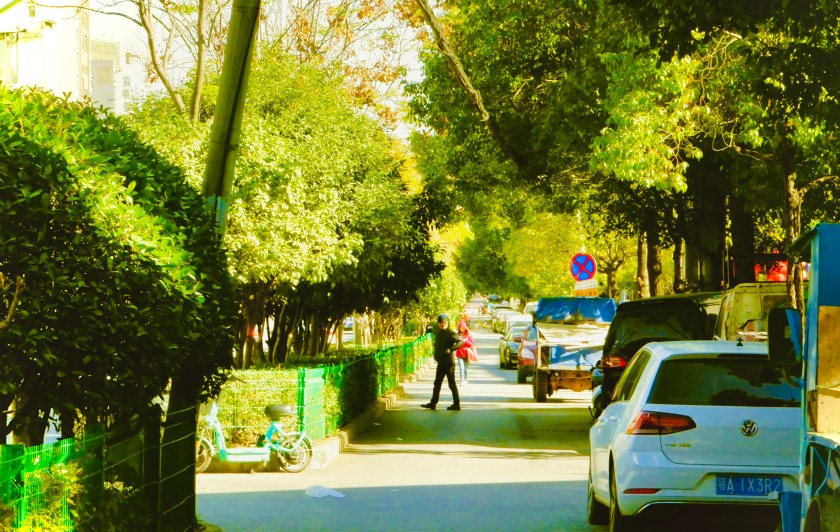
Back in the 90s, living mostly in the rural areas where no one truly owned a colored television until they got married though housing didn’t appear to be such a big issue to many youngsters at that time as is now, I remembered from my mother’s conversations with her friends, that people desired a bigger size of family which means more children and living with grandparents. And, at that time, the influence of postmodern dogmas that merit individualistic ideals, it appeared, didn’t grow so prevalent; and the notion of personal liberity didn’t, yet, evolve into who-cares ideology and radical self-centeredness. People, it seemed then, tend to form more lasting friendships than now in part because social media didn’t emerge at that time; and when it did in this age of information, we bear the brunt of a damaged sense of selfhood. It’s not considered news to discover that people seem to rely completely on virtual and online means to communicate with our friends rather than in-person ways. Thus, no wonder the gradual death of letter writing practice becomes the most significant mark of a divide between the past and now. The 90s, many would argue, is already a distant past so don’t dwell in it.
But how can one not dwell in it when in the end, it is with the fact that our memories, ableit sometimes inaccurate, shaped our narrative that we come to tell our stories.
Perhaps, one should know very early on that Hessler’s River Town is not a book about nostalgia nor is any book by certain similar authors like Fuchsia Dunlop, author of Shark Fin and Sichuan Pepper, in part because time is a theme that we write about all our lives. What the authors writing about small places share is an kind of mindfulness fully aware of the vastness of an landscape tainted by its artistic underrepresentation and an understanding that artistic valuation doesn’t need to be centered on certain corners of the world that have already received, relatively, greater attention such as Paris, London, Hong Kong—and the list could be extended. Certainly no truthful and visceral observations about anything related to the ‘big’ places like Hemingway writing about his experience of living in Paris or like Victor Serge writing about his participation in and reflection on the Soviet revolutions would be considered superfluous; rather, they are essential to our moral and intellectual becoming.
Though, like many other observers from the West, political and ideological elements certainly —if not centrally—captured the attention of the author of River Town, seeing our world in the lens of ideological preferences is, well, almost inevitable. One without the need to cite George Orwell and Victor Serge could easily demonstrate the difficult relationship between politics and art. It’s something every person who wrote and write has to come across. Reflecting on and contemplating the eventful and significant years of the last 60-70s in the US characterized by the civil rights movements and segregation, Toni Morrison made a point about politics influencing art in her preface to her work Sula, stating that if the novel was good, it was because it was faithful to a certain kind of politics; if it was bad, it was because it was faithless to them. One could not help but feel serious literary works of art could hardly be free of ideological influences perhaps in part because ideology is itself a central element that influences how we live. To many, politically influenced writing like those pieces appearing on the op-ed sections with hidden agendas is something whose presence gets larger day by day with the help of social media. What this age in which we live lacks is a calmer voice that tells firsthand experiences about certain matters somewhere distant from a readership that has been told different versions of a story far away from truth. Could we state plainly that what is most in lack in this age of social indifference is truth? Perhaps not with much certainty.
Notes
If, also, I say I started to care even less about news headlines, outraging geopolitical comments, editorials, apparent misinformation of almost everything crucial for our social stability, a lot of disbelief may come around because, as a man, no one would appear able to resist the attraction of politics, perhaps the source of all powers. But, indeed, seeing news outlets propagating that some country or group of people exposes a serious threat to the security of this and that isn’t really helpful to anyone sitting before that screen.
By Lou Hsienhua (also known as Tome Loulin)
Like it or not, life is not going to define us. We define it.
Several years ago when I graduated from a university in Wuhan, looking for jobs to do, nothing in my late teen and early twenty years may look more mythic than serious consideration of partnership with somebody I like, perhaps, because it involves more attention paid on others whose presence in my life might appear hard to grasp.
At that summer when I roamed across the streets of Wuhan to look for jobs, the things I cared of a lot were salaries, due payments of rents, and weight loss theories. All of those concerns appeared to me now trivial, relatively, as everything then was still untouched by the pandemic and didn’t require a serious consideration of social isolation. It’s easy to falsify the strength of youth as something lasting forever. For usually, the power of youth makes us fearless, optimistic, forward-looking, and feel whole, the goals of our life after twenty become to stay as young as possible or pretending our every forthcoming birthday is the eighteenth. We were, seemingly, still untouched by the force of time. We were, still, not forced to reflect on the possible impact of aging. We were—just few years ago before the pandemic—yet forced to consider the impact of gradual conversion from late adolescence to early adulthood. We were, yet, to realize the huge responsibility of growing up financially stricken.
These things, as I sensed out, had yet to make an impact on my sense of selfhood. Money, I learned not too late, is necessary to get things around. And that’s something I didn’t have much so, naturally, after my graduation from the university, I took job interviews seriously even though with the awareness that those interviewers didn’t take me seriously. Usually, the outcome of an hour-long bus ride to an interviewer’s office plus hours more of preparations was a brief conversation that could hardly result in anything closer to an offer.
Thus, at that time, it didn’t appear unusual to see me work in retail stores and in other jobs that didn’t pay much. Even before 2020, I was in financial trouble due to the low-paying nature of the jobs I took. Urban poverty—though didn’t appear familiar to me then—became a perfect phrase to describe the very situation I was in until my enrolling into a graduate school one year ago in Wuhan.
By the time I got to the city again, I started to miss what I had left behind then before the pandemic. For example, I started to miss that version of myself several years ago that usually take things relatively lightly. For example, I started to miss the appetencies I had for socialization. I had been taking low-paying jobs in the city years ago but still feeling intellectually thriving because my identity and self-value were not much affected by others’ treatment of me. I learned not to take others’ view of me personally, to defy others’ misconception of my value and to hold firm my own sense of who I really am.
This ability to resist that social molding is vital to our survival. I took that seriously. My heart still turned warm when I recollected a conversation that I had in a dating with a person who tried to remember the exact scent extracted from a grapefruit essential oil I liked in order to, also, remember me when we were not together.
Mindful of the warmth I felt when conversing with those who showed respects, care, consideration to me, I, for the very first time in my life, started, seriously, to learn from them, from their lovingness, considerateness, and gentleness. I often thought, how much love one can show to others is, really, determined by the portion of love he/she received.
Aware also of the fact that early adulthood is a complicated thing, I tried to remain open-minded, willing to learn the other side of something I knew or not. And I was also lost, in the middle of nowhere. The beliefs considered important by me turned out misguiding when I apparently found that following them could cause more harm than good to my sense of wholesomeness as evident in my thinking that being perfect in many aspects of our life was truly desirable. It really wasn’t.
Being relatively ordinary, I recognized lately, was more desirable then being extraordinary in some cases. One of such cases, I realized, was the extreme pursuit of forever youth, and beauty. Being beautiful is one of the traits and benefits youth offers and is, among other things, the most desirable things to preserve. Popular cultures now no matter in the East or in the West glorify the concept of beauty supremacy, which usually results in people doing things harmful to their bodies to achieve the ideal state of beauty.
Such idealization of beauty in our society is prevalent as evident in the believers buying cosmetic products almost all in excess without a second thought.
If I state plainly that I cared less about fashion trends, cosmetic products, or clothes that may help me feel better about how I look to others, that, some may argue, is normal, even preferable, because I—as a member of a sex that is said, in conventional standards, to focus more about being powerful than about attracting the powerful—was not expected to take those things seriously. Yet, this change of habits is not caused by something unexpected, since the entire world now is still upside down and caring for ‘the superficial’ may be impropriate. But if, also, I say I started to care even less about news headlines, contentious geopolitical comments, editorials, apparent misinformation of almost everything crucial for our social stability, a lot of disbelief may come around because, as a member of a gender that is believed by many in society to be the seeker of power, no one in that group is believed able to resist the attraction of politics, which is, perhaps, the source of all powers. But it’s certainly true that I denounce severely the inflammatory nature of politic games, power grabs, and war talks. But, indeed, seeing news outlets propagating that ‘some’ country or group of people exposes a serious threat to the security of blah blah isn’t really helpful to anyone sitting before that screen intellectually.
The exact wording of the news media nowadays is like one from a troubled adolescent. Life after twenty is a complicated matter and it already is before that. As the poem has it:
Actually, we don’t need a house,
To stay contented.
Our chests lay down on the ground
Like flowers from afar,
Petals from potted flowers on the desk fall by the winds breezing away.
Rivers flowing through my palms are so distant from the soft earth.
My entire life, it seems, is up in the air.
Every evening before the sun sets,
People wait for the leaves to fall where the roots are.
The poem in the end of the essay, Waiting to Go back, is by Jiang Di, and is translated from Chinese into English by Lou Hsienhua.
Leafing through the pages of certain geography magazines full of picturesque attractions, I saw, in pictures, Tianshan mountain, Qilian mountains, and the Taklamakan Desert in the northwestern part of China.
By Lou Hsienhua
It is said that every dream has an origin. Yet, the origin of my dream to travel around the world, it appears, is hard to trace.
With ambiguities, I could remember what attracted my attention the most when I was a child: the beautiful landscape pictures. At that moment, the existence of picturesque natural wonders reminded me of how beautiful our ‘life journeys’ could be as long as we insist our wish to travel be fulfilled.
In the early 2000s, there was an inclination inside the circle of geographical magazines to narrow their focus on places that were topographically diverse and culturally central, such as big urban centers whose past was deemed essential to the formation of our specific cultural identity—like Beijing, Shanghai in China, Toronto, Quito, New York, Paris, London, Moscow etc. around the world—and mountainous areas in southwestern China.
Plains were not getting much attention from the geographical magazines or landscape photographers. Perhaps its geographical blandness is a put-off for an industry driven by ‘visual freshness’. And it turned out because my hometown locates in central China’s Jianghan Plain, I could hardly find any representative presence of it on media, geography documentaries, or geographic books. It’s the flatness of it that shaped the way I see the outside of it.
Faraway lands seem to be a metaphor for something we yearn for. Its unreachability represents the most prominent aspect of desiring passions
I saw, in pictures, the Loess Plateau in the north where lands were overlain by a mantle of yellowish alluvium. And where the mountains were bare, forestless, and standing like an old man with a face wrinkled, weathered but still looking unshakably strong.
In The Bloodstain of Mountain Changbai, Xiao Hong, a Chinese writer born in the northeastern province of Heilongjiang in 1911, wrote: the landscape of China’s north, comparing to that of the south where moistness and serenity defined its feature, is sublimely majestic and vigorous, which is second to none.
I have never been to China’s northeast.
I have only been to China’s north in Beijing several years ago midway in summer. That summer, in my memory, was characterized by aridness, and extreme heat. Though it’s common in the south to expect extreme heat in hot summer days, it’s considered less common to experience that kind of climate aridness in southerners’ living memories about summer.
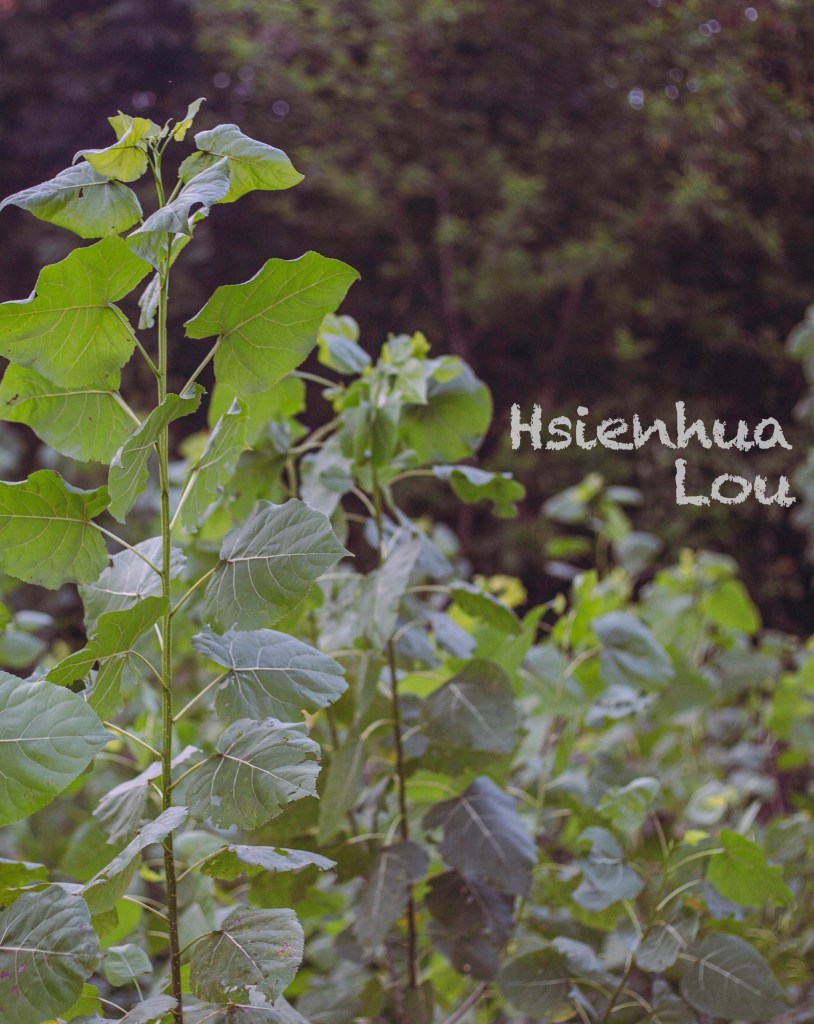
Onscreen, there were forest-covered mountains that seemed like a passing fancy for a ten-year old growing up in small villages. I knew, from an early time of my life, it would only be a matter of time before what I thought was normal gradually became what I could hardly afford to lose, and forget. As I stood gazing up aimlessly around the stary sky, I started to miss the things I could hardly afford to lose but that had faded away anyway. Things like buffaloes roaming around the wasted grassland near my childhood residence in the countryside, and blooming colza flowers yellowing the entire field. Something I could not afford to lose.
All four seasons are leaving me now.
What I could grasp were only these autumn winds in which
Falling leaves blew along the streets outside of the theatre.

You greeted me with a smile almost unnoticeable, gradually away.
’twas about five years past.
With tears welling up,
I recognize what hasn’t come would never come.

Walk along the beach in the evenings.
Inside windows that open and shut,
Candlelights are what appears the most consolatory for those with a broken heart.
Fishing lamps, where have they gone?

All four seasons are like waves both serene and rippling.
Welcoming autumn is for years what I wish to do.

Let the chrysanthemum bloom in fatigue, like a sigh.
Let it bloom like me unable to meet the one I love.
Spreading out the whitish notepaper,
I write down those summer days,
During which we walked together along the beach.

Welcoming Autumn by Lao Mu
Translated from Chinese by Lou Hsienhua
“It’s easy to see the beginnings of things, and harder to see the ends.” Joan Didion wrote in Goodby to All That. At that time, I could almost recollect, though with a little uncertainty that makes me less certain about the accuracy of the words I wrote, when the city of Qianjiang, in south Hubei, began for me but I could hardly figure out at which moment it suspended. Maybe it never ended. Maybe I could go back where it was again in my memory as long as I felt I was as expectant as I once was.
But the moment of change certainly starts when I reflected on the question of belonging. The problem of rootedness. There is always a pause when I was asked where is worth visiting in the city of Qianjiang. It’s hard to see the standards by which a place is considered worth visiting. For Chinese bibliophiles, a museum dedicated for the remembrance of Cao Yu, a Chinese playwright whose ancestral home is in Qianjiang may be considered a must-go. But for others whose personal interests vary, it’s harder to tell by which standard, a place is for them. Overall, it’s a small city not dissimilar to any other same-sized ones.
What do we mean when we express our love for travelling? Travelling is life, it is said. It’s like an ideal used by those who wish to metaphorize their desire for a fulfilling life. This metaphor is so widely accepted that it is almost our second nature to liken the places we haven’t been to anything desirable, majestically serene, or adventurous as if anything familiar to us is tediously uninteresting. Life, some may argue, is about pursuing things, instead of holding them. This, it is only too common to lose our interest to something when it’s gained, or obtained. We have goals. But in the end, we could hardly lay a finger upon the exact point that our goals are for.
It’s not uncommon for some writers to appear a bit superstitious. Life is one of the most mythicized things that we feel no control of. Better believe in something. And for some writers, this believing in something turned out to be youth. If life is a floral plant, youth is certainly its blossom. And in the end, where we’d been in the early years of our life gradually becomes the memento of our youth. In Ernest Hemingway’s later years, he was trying to finish his ‘Paris stuff”, a recollection of his youth time spent in Paris that was later, posthumously, published and titled A Moveable Feast.
Perhaps in the end, the only way to reconnect to our youth, besides photographs, could truly be the places where our younger selves stayed. As Hemingway put it, “there were many words that you could not stand to hear and finally only the names of places had dignity.”
Decades ago when I, for the first time in my life, headed for the city of Wuhan to start my college years, life after seventeen still seems mixed with complex feelings of bittersweetness and expectations of a better future. The lastingness of youth, we truly believed, seemed to be something we took for granted. My grandparents reminded me to get thicker beddings and quilts lest I get cold. Life outside home, at that time, seemed deeply unsatisfying, yet, it provided a priceless freedom whose value we took an awfully long time to realize. At first, it’s the kind of freedom that requires no other additional efforts to earn. Yet when we grew up, it gives no chance for us to regain it. It is the fleetingness of youth that is what we didn’t see. By the time we realise the value of it, it’s gone.
Life at that time seemed so beautifully innocent that even the most unendurable disturbances such as chaotic verbal conflictions witnessed on bus could be rendered as the bassline of a grand symphony of life.
When we talk about cities, what do we exactly mean? Do we, for example, mean we feel the time we spent there or the atmosphere that specific city posed bears a special meaning to us? Perhaps. More often than not, when I think of the city of Qianjiang, I start to recollect my teen years during which I learned various ‘life lessons’ others considered important by certain standards. When I think of the city of Wuhan, I, almost immediately, remember my early twenties during which I tried to explore the options for me to live my life in a fulfilling way.
Many years ago when I was there in Wuhan, it was largely under upgrade mode—a scheme to gentrify its old boroughs and blocks considered, by the officials, dysfunctional and cut off. I was, at that time, living in a rented apartment near the Nanhu region of the city, trying to build a life based on my own ideals, hopeful of freeing myself from the intellectual restrictions set by capitalistically caused financial difficulties by thinking only about the ‘fact’ that anyone alive should be free of defining what to love, what to value.
The city of Wuhan at that period was still under ‘infrastructure transformation’. Almost every street where I walked across in the city, as my memory has it, was gradually becoming unrecognisable in a matter of days. A speed faster than my ability to perceive it. And then, every time it rained, the roads near the lake-bound regions of the city would, usually, turned into muddy riverbeds, making it hard for pedestrians to walk back home, or go working. In the night, it was most expected that piercing noises of tracks carrying sands to disturb your sleep.
Looking back at the city of Wuhan across whose streets I roamed, taking photographs several years ago, I assumed that maybe every city under ‘upgrading scheme’ might look like this, messy and disorderly. But such disturbances like noises in the night were not considered a nausea during my stay at the city in my life after 18 because the power of beauty and self-regarding—all characteristic of youth—is so enticing and great that no thing—including those disturbances— seemed able to suppress it.
With Mydans’ photography, this framed painfulness becomes eternal. One even without prior knowledge about photojournalism would know how hard and heart-rendering it is to experience war, indeed, any kind of war, whether firsthand or second.
Also known as Hsienhua Lou, Tome Loulin lives in Hubei’s Qianjiang city and is currently a graduate student of translation studies. Email: letters@zhexuezhe.com
Exclusiveness, it occurs to me, is the nature of culture. This trait has so far in our documented history shaped and redefined the way we live now since everything sophisticated enough to be taken seriously involves cultural elements. Thus, a radicalization of our cultural imagination in this digital era, whose power of shaping our views about other groups of people seems so powerful, may itself seem like a romantic defense of our right to reclaim our cultural identity, which defines the meaning of our life, because many people do see culture as a imagined home that harbors our dreams, ambitious or not. And home means being free, free to truly see ourselves as what we are, free of malicious attacks from those intolerant of what we value, love, and cherish. And sometimes, the yearning of a home, it holds, reflects a sense of insecurity inside us. Living is, overall, like a journey to find that home, one that’s ideal, free, safe, and accepting.
A harmonious in-group experience, we tend to believe, exists. And it does only when a specific kind of cultural idealization is backed by many inside of that cultural home. But this identity is truly a fleeting thing and its survival depends on the very values we hold. That’s where the generational gaps started and kept accelerating because a moral standard deemed widely accepting and normal may appear horrifyingly limiting and flawed. Time flies and people change their minds so fast that its process is sometimes unnoticeable. The notion of an inclusive community where every specific way of life is respected and accepted is usually filling up our growing discontentment with this rather dysfunctional and dystopian social reality. That the narratives told by those self-proclaimed cultural supremacists aim at defining moral righteousness demonstrates why certain talks about contemporary culture and society have been largely dominated by those intolerant of cultural equality and diversity. Our spiritual existence is, you may agree, constantly under threat from political-motivated hatreds against other groups because of their very preferences for certain ways of life or, in certain cases, of their biological features.
The time I started noticing certain reports posted on serval internationally influential news media is a time of recognizing how far this ongoing cultural alienization could go. Truth be told, rarely would there be a writer whose creative power wasn’t influenced, in some ways, by the anxieties posed by the geopolitical tensions occurring at the his/her time. The cultural scenes dominating today’s news media are, indeed, aimed at being ideologically, culturally correct, meaning what we see now is merely a controlled representation of how should this world we share be viewed by countless eager minds. In his ‘1984‘, Reality, Orwell wrote, exists in the human mind, and nowhere else. Yet, to concretize his phantasm of an internalized cultural and political dystopia, it appears, proves to be tormenting. Human imaginations–or idealizations–of a fixed, permanent home are indeed an expected universality whose meanings we should, as expected, have no difficulty of comprehending. But why—given this century’s rapid advancement of information technology and our expanding knowledge about a swath of cultural terrains previously unknown to us—are the misunderstandings about people from different countries gotten deepened?
Public opinions are prone to manipulations. There comes this new experience of living in this culturally radical era and of being immersed in a sea of phenomenal misunderstanding of what does the concept of being ‘the cultural and social Other’ mean. ‘People’ as a concept widely used in journalistic and cultural talks to get certain manipulators’ agenda done is a cliché whose power to make us feel home would hardly subside for this imaged cultural home is so much in need at a time characterized by social indifference that impacts the way we live now.
There have been so many opinion pieces warning us about the danger of certain countries as it turns out. Also, there are war talkers whose ‘analyses’ or ‘opinions’ published or deliberated on mainstream media impact the way the readers make sense about the perceived ‘enemies’. Theirs was a way of ceaselessly warning about the threat from an ‘enemy’ usually out of the reason that its political system is different or not rule-based. It’s since when that the notion of protecting the values become synonymous with boundless hatred and violence inciting? Warmongers often believe in order to have peace kept, wars are inevitable or, in some extent, worth waging as long as it is good at achieving their agandas. Those who voice their concerns about wars, any war, are often attacked and labeled as apologists.
War of any kind is a selfish act as its impact on the displaced, wounded, homeless, affected could only be the worst thing ever thinkable, something not only hard to behold but to experience. Yet, on certain newspapers, there are opinion sections full of pieces telling, or warning if you will, readers how dangerous is a perceived geopolitical competitor or the threat from it. It will, some may argue, disrupt the way of life as we know it if we don’t take critical actions against those perceived enemies.
“Sooner or later, an explosion will occur. Yet substituting confrontation for engagement is reckless and futile if the west is not prepared to put its money, political muscle and ultimately its armed forces where its mouth is.” the opinionator, Simon Tisdall, lamented in his piece published on the Guardian in July, warning that there will be ‘an explosion’ occurring between the two countries he mentioned. What kind of an explosion? How damaging is it?
“Confrontations, political muscle, armed forces, explosion, and futile” these words, it turns out, have the power to get the least political-sensitive person shocked if it didn’t seem crucial for the reader to see the evidences required to prove the urgency of taking measures against the described and perceived ‘threat’ before reaching out to a conclusion. Since it is always the cautious ‘analyses’ about other countries that come first to readers before facts, it is no exaggeration to say that now despite recognizing that ideological one-sidedness and partiality defined the characters of today’s news media, holding a more friendly and positive attitude towards another culture different to ours becomes unlikely. War-wagers are praised, in many instances, as guards, fighters whose precautious talks about war are to be widely disseminated from one era to another, compulsorily learned by all members of the society’s young. Often forgotten are the horrors experienced by so many who were displaced, resettled, homeless and died during various wars.
There is a photograph by Carl Mydans—first published on LIFE magazine—captioned: ruins of village near Penghu in Chinese civil war. Framed in the black and white picture is a woman, her head turbaned with traditional Chinese headwear, simple-dressed, in despair, helplessly and heart-brokenly kneeing in front of what appeared to be her hut that was ruined in the war, perhaps, by fire. The ruined hut that was almost unrecognizable with only some brunt pillars remaining standing. With Mydans’ photography, this framed painfulness becomes eternal. One even without prior knowledge about photojournalism would know how hard and heart-rendering it is to experience war, indeed, any kind of war, whether firsthand or second.
Yet photographs, overall, do not provide us a visual experience that had them taken in the first place; instead, what photography does provide are various visual spaces it creates in our minds, leading us through the scenes similiar to the original ones that led photographers to press the shutter. The looking of photographs, it appears, always suggests a secondhand, alternative reality whose psychological significance brings us to a limited area of subjective imagining. But after seeing Mydans’ pictures, one could only get more uncertain about the war than about the sufferings immortalized inside the frames: where had the woman affected by the war gone? And how was she?
There were no answers.
It seems confusing perhaps for—if the horrors of war suffered by those silenced, wounded, killed in wars remain disregarded—such photographs, indeed, will be innumerous.
There are many different ways of seeing and how others see us, as Lou Hsienhua puts it, impacts the way we deal with the world as we try hard to make sure there is no distorted image about us drawn by others. When coming to the problem of self-imagining, the way we see ourselves, Hsienhua thinks, should never be dictated by anyone else but us. Resistant youths nowadays who try to claim their independence may declare that they are not what you see, meaning what you see about them is inaccurate, distorted, and, most importantly, subjective. Seeing, overall, is a complicated matter.
By Tome Loulin 娄林桦(笔名), also known as Hsienhua Lou, he lives in Hubei’s Qianjiang city and is currently a graduate student of translation studies.
There are many different ways of seeing, all of which picture us as something other than ourselves. Seeing, as the saying goes, is believing, perhaps, because the power it has on our belief system seems too powerful to resist. And the cognitive authority of seeing that makes people believe whatever comes around them is prone to abuse. For seeing as a way of interpretation, there are ordinary seeings, biased, partial, undesired seeings, free and imaginative seeings, critical or uncritical seeings. Here, the exact types of seeing I wish to discuss are critical and imaginative seeings from which our self image comes to shape.
What follows are some points of view on the very happenings around certain places whereto I have for years stayed close at this critical era whose characteristics, it’s occurred to me, are a fluid and puzzling mixture of radical thinkings. These thoughts whose spreading around world has, at least partially, helped accelerate an ongoing process of social degeneration, can be seen in some ways as a salient form of resistance under pressure from the irresistible force of time to a haunted experience of cultural invisibility, misrepresentation, and ignorance. What was left untouched in this complete washing of our dreams along the bank of meaninglessness may be our already dimmed hope about a spiritual and personal betterment. I see, through the reflections of myself, strangers, concretes, and other things tedious, dull, beautiful, noticeable or ignorable on the dark grey window glasses I passed by in the streets of Wuhan and other cities in Hubei. It is our senses that, you may agree, shaped our very idea of what it is like for a person to be alive in this world and of what this world should look like physically. This should-look-ness provides us with the constant fresh flow of critical idealization of our spirituality and takes our imagination home.
What we see or don’t may, it appears, set the boundary of our artistic imagination. Here we are, seeing ourselves in glasses, mirrors, other people’s eyes, and any other reflective surfaces. These ways of seeing generate images that are said to be reflective of our characters, appearances, preferences whose core representations we, in the seeable and sensible world, try hard not to be distorted by the means of external seeings, perhaps, out of the fear that every image of us generated by other ways of seeing may critically threaten the survival of our very ability of seeing ourselves in a more sublime light ever imaginable in our otherworldly-defined spiritual sensation.
Seeing, it occurs to me, is essential to our ability to interpret who we are and defines the boundary between self and other. But what matters regarding different way of seeing, you may agree, is that the power to believe what we see is so strong that false impressions or stereotyped images we have formed about others or others have about us may threaten the freedom of our self-imagination. To be seen by others as something other than what one thinks oneself of is the reason why knowing oneself is a lifelong task. If we let other person’s imagination about ourselves dictate, we will lose the way. The purpose of this learning-driven kind of seeing is, perhaps, to make sure that what we see stays true to our beliefs that we are, overall, special for it is our own self who can see the potential and possibility of a self-transcendence that could hardly be seen by others. And it is we ourselves who have the ability to cast inside of us a new light whose uniqueness may determine the way of our becoming. In different cultural systems that shape how in-groupers see themselves collectively, seldom will there be no sayings emphasizing how important it is to realize the fleetingness of the images or the impressions we formed inside about certain things. Things whose change, for instance, may appear so transformational that if we don’t pay attention, we may lose our ways. Resisting it may risk us to see others in distorted lens, creating inaccurate stereotypes about things and people we thought we know.
Interpersonal seeings, which in many ways inter-influence people’s attitude towards others, are usually critical, unloving, unflattering in many different social settings. The most pronounced feature of this over-industrialized era may be that the treatment certain people could get in certain societies may be decided by their social occupations, origin of birth, age, or, in some cases, physical appearances. There are upward seeings, and downward ones. What your image looks like in others’ eyes has been, you may agree, determined by how well you fulfill the idealized or normalized standards widely accepted by a society such as the prestigious-ness of the university one graduates, the number of houses or cars one owns. Those sleeping outdoors, homeless, low-wage earners obtain only a friction of this society’s critical attention perhaps, out of the reason that if we see to much, there will only be more unbearable scenes to be discovered. It’s, you may think, endless.
What happens when I told someone who asks where my home is that I don’t know where to specify. Oh, you must feel many places home, the questioner may think. But the truth is otherwise. For many people, there may be little or no difficulties to answer questions about where we come from or where we feel home if the places one feels close to or home happens to be Beijing, New York, London, Shanghai, Quito, Rome or anywhere else whose cultural and imaginative significance created and shaped by various popular artist, authors, photographers, film directors, and journalists appears to be a spontaneous immediacy. But mine is somewhere that rarely have some people heard even in my own country, let alone in others. Geographical locations are destinies. I come from small places whose overlooked-ness also reflects a partial seeing that has been favored by our culture that uncritically instills a belief that in today’s world, the point of seeing is to make a point. A point of seeing is not a judgement, or is it?
The fact that seeing can provide us pleasures if we focus on certain things we deemed to be worth seeing indicates that our self-image, overall, is the product of our own idealization of how should we be seen; the point is how should ourselves be seen by ourselves. Am I good at this or that, or have I been fashionable or cool, people may wonder if they wish to appear more like their imagined selves. But there are certain occasions one could not even afford to take proper care of how other people will see them.
It was a breezily hot summer evening and I was sitting inside of a Starbucks in Hankou of Wuhan this year, not ordering anything but waiting a friend of mine to finish his shopping at a Sam’s Club nearby. Because this friend’s home is in the outskirts of Wuhan where getting anything after the nearest convenient store closed at nine pm appeared impossible and he had to buy groceries and ready-to-cook food almost in bulk, the time spent on waiting for him to finish the shopping was going to be long. Directionless, I was, as always, immersed in my own imaginative way of seeing the world by looking outside of the window at whatever would appear before it. A bit confused, an old man perhaps in his sixties in a white T-shirt well wore came into the cafe, looking aimless and trying to appear fine as he went across the tables to sit down on a sofa.When he sat down his gaze looked determined, contemplative, but also sentimental. Nobody, including a little boy who asked me what I was seeing outside, apparently out of his wonder that I seemed attracted by something else that he didn’t see. I wasn’t, actually, seeing anything that boy might have missed but the old man sitting silent and looking saddened by things I might not know and he might find hard to disclose to others. The man looked so sad that his eyes were, like, tearful. When he left the cafe, nobody seemed to notice. Why didn’t he, I wondered, stay inside longer for the outside was so hot and full of indifferent gazes. But what a difference could it make to stay a bit longer inside as the old man seemed to have seen enough of what he couldn’t bear to behold. Perhaps, the temperature inside of the cafe, I thought, was too cold to stay.
Seeing, I think, is not an illusive re-imagination of what we have seen, or is it?
With years passing unnoticed, remembering what made us today becomes a necessity. As this unprecedented change that impacts the way we live ripples across almost every corner of the world, to live has become, it occurred, a specific way of realizing and remembering what we cannot live without.
By Tome Loulin
From a very early time of that summer, I come to imagine that it would only be a matter of time before we again walk together, only to realize that a thing that comes along easily doesn’t necessarily walk away the same way. Everything, it occurred, comes and departs in its own preferred way.
It was about time for me to go home just as you were ready to work when the summer sun whose light glistened through the window of your room was in its prime near Hankou’s side of Yangzi. Seeing my worried face, and voice lowered, you said the watch lost a day ago when we strolled together around a lakeside really wasn’t that important. “It just isn’t.” you assured me, rejecting the offer I proposed to buy a watch for you.
Pinned on the wall of your room were postcards and letters of gratitude you received—from individuals you encountered before in the different stages of your life. In one of such photos appeared a couple in their middle fifties squatting beside a dog before their house near–if I didn’t remember it wrong– Nashville, Tennessee. Before your vivid and detailed recounts about your life in Nashville many years ago, your experience of working there as a K-12 teacher of Mandarin Chinese, the room you rented there, and the beautiful pictures about you and the students you taught, I knew almost nothing substantial about Nashville other than it being the heart of American country music, let alone any intimate imagination about it. In one of these photos appeared houseplants placed on a wooden desk in your previous room; besides a nightstand was a black iron single bed covered with white beddings. And when you talked about Nashville, your voice was like, I felt, filled with ineffable liveliness that was lovingly touching to me as if all of the things that you recounted—green plants, your students, and the days you spent in the States—were emerging afresh from your memory, rippling across mine.
On the windowsill were potted plants you took care of thoroughly; beside it several lucky bamboos in vases growing with time bigger and bigger. Such is the delicacy and sophistication of the way the room was decorated that so much was said, I thought, of your carefulness of life’s beautifulness. After we saw the sun set and biked along the lake of Donghu together, the electronic watch you wore was lost, you, astride the bike seat, said, leaving me several meters away from you speechless because I didn’t expect such thing to happen in a time when all I was thinking of was how could I maintain a happy memory for us and a good impression of me to you. And it was the first time we set our feet together to walk in a park where trees were everywhere though everyone who came here looked indifferent to the issue we encountered.
There was like a sea of people waving up and down on the road by the winds coming afar when I tried to bike as fast as I could to go back to where the watch could perhaps get lost. “If this is truly lost,” I thought, “this evening would be a very upsettingly remembered one.” So, losing almost no time of searching and lying the bike on the ground unlocked, I checked bench after bench near where we had sat around of the evening but found no clue of its whereabouts.
“Why this worried,” you said to me, “it’s truly unnecessary for I could buy another one.”
But somehow, aware of your voice lowered, though still touchingly soft, I felt that until the lost thing be recovered, our sentiment towards each other would never be the same as before. I insisted to buy a watch as a gift to you but very determinedly you refused. So it occurred to me that your sentiment is perhaps that if it was truly lost, so be it. I was not this prepared for this suddenness of change occurred during that evening walk.
Life changes fast. And it truly does, I think when reading the opening lines of Didion’s the Year of Magical Thinking.
Life changes in the instant.
And I start to think of the way we think about each other.
As we walk around the lake and try to know each more, the way we thought of one another exists no longer.
Sideways were bikers speeding toward another way after we got our way back to the room you rented but I wasn’t attentive as was before. Of course, the feeling I had that evening after the event was a travail matter of personal tranquility compared to other life matters but what challenged this sense of triviality was that a parent of the student in your class contacted you and asked whether the watch picked by a stranger in the park was yours thanks to the phone numbers you saved in the watch. I was in surprise, especially after my doubt that there would be zero possibility to find the lost watch given the current social reality characterized by radical indifference of social connections.
Away summer goes and comes back.
Along the lake bank
Over the water was the reflection of the sun
Setting westward back.

-Loulin
“Believe in the goodness of people.” You had said then. And it was then I was to wonder whether there was such thing as destiny. And from a very early age, immersed in Chinese cultural environment while growing up, I knew destiny is a concept widely believed by many and it was not until the turn of the century that the concept was to lose some of its attractions to younger generations.
But I knew, in that moment, the coincidence couldn’t be more demonstrative to me, which is, you were like the sun whose light shone through the heart of the wounded. It occurred, like what you had already been doing, that to see the positive side of, if possible, everything is how can we better regard the pains we felt while growing up.
Though I lost your connection due to my own carelessness, I tried hard, if not helplessly, to imagine that I didn’t because that experience was just too cherishing to lose.
In trying times like this when everything reported or described on newspaper appears horrifyingly intentioned and purposed, I start to think of the time I spent with you in the very evening, perhaps years before. And it is healing.
This memory, though certain details of it are blurred with time, still seems so close to me that my tears well up when I look back to the pictures I took then or anything related to that memory.
It is with the help of written language that our thoughts and ideas could be more widely disseminated, known, understood, critically examined or misinterpreted in the public so we won’t easily surrender our past to time.
By Tome Loulin
For many times around, I did not know what to remember not because of the forgetfulness but of the heaviness of the things gone too soon to be properly preserved or remembered. Writing is, of course, not all about remembering things worth remembering but imagining also, maybe, because for most of us, there are many different ways of interpretating an event.
Human beings are capable of telling a thing or a story from different angles, increasing the fragility of our already-too-fragile belief of the existing of truth. Writers, who are said to be the truth seekers and to occupy a moral vocation, rarely write for their own interests but for the irresistible urge to tell something ineffably important, something absolutely meaningful.
To this point, nothing stops writers from picking up their pens to write something worth our attention. In this regard, writers are more like attention guiders, instead of attention seekers. The very notion that ‘something important’, if untold, may never find its appropriate candidate who can tell and retell it clearly is still evidently relevant to and resonate with today’s critical minds who have longed for the reevaluation of our living conventions altogether not because the languages we speak fail short to regard this issue but because storytelling as a moral occupation is always a way for us to discover how incompetent a storyteller is. What a great storyteller could reveal is nothing but this: every seeing has a angle and every narrator has a standing. And the question that is yet to be examined critically by all who love, care of, concerned about literature couldn’t be more obvious: are the words we use to record the relationship between our mental world and this physical reality accurate or not, especially when they are used to describe the things that we think are the fact?
People, mostly, use language not only for communication but for the remembrance of personal significance. In our understanding, we, from a very early age, learned to separate things, things that are categorized dichotomously such as ours versus theirs, here versus there, present versus past, alien versus familial etc. so no wonder we are all like edging toward one extreme to another, failing short to maintain a grey-zone where differentness of everything is recognized and preserved as the fundamental prerequisite that guarantees our harmonious existence. And perhaps inevitably, this notion of differentness may sound unsounding to some who prefer the ultimate selection, which is usually another word for indifference, of the competence by the force of nature or natural selection for short.
And by writing, things known or unknown come to our mind in the form of labels, ambiguously defined concepts that are usually self-reflectively over-generalized without proper consideration of the untypical, odd, and rare.
Like photographs that often vivify, permanentize, and seizure the moments personally significant and precious to us because what camera captures is not merely visually preserved images but also the feelings that are related to certain moments and that could hardly be re-experienced without this medium, words are used directly for such purposes but with lesser degree for letters and characters are initially intentioned to record collectively important events. And compared to spoken language, the history of written form of languages is much near and short, suggesting a greater loss of connection between the current and the early ages. And despite of this lateness, writing system is much advantageous to withstand the test of time in term of the preservation of our spiritual selves.
And it is with the help of written language that our thoughts and ideas could be more widely disseminated, known, understood, critically examined or misinterpreted in the public so we won’t easily surrender our past to time. We can get more time to indulge in the past that existed in our mental world, even that past memory may very likely be distorted inevitably by the force of time. But we yearn for that literary remembrance because that may be the own way we can pretend that something beautiful could be at least partially remembered. And for many of us, the factualness of a written record of one’s past is not the point of concern here; instead, it’s the genuineness of the feelings inside the work that we value for we create words in order to preserve our inner selves from which our dreams come.
The sparrows that sometimes came to stay before my window were singing. Outside of the window, the trees whose names I was unable to utter were shining under the sun.
By Tome Loulin
Inexpressible Things Unexpressed
A year is a long time to leave any piece on a newspaper unlooked at, and the posts on the Wall Street Journal have been left without a glimpse even longer than that since its usage of a s-word to describe a country in Asia in an op-ed title. I say “unlooked at” instead of “unread” because to read things demands the involvement of one’s imagination while to look always includes the possibility of encountering something undesirable. Ineffably, the business of glancing at certain titles on news outlets got so difficult that the mere act of seeing might tremble my body if certain adjectives or nouns purposed specifically follow their owner’s lead. Yet, the sentiment and reaction I have had since may not be the case for others but I wondered where are those who pen words that way standing and to whom are they speaking?
I remembered, relying on my own memory, a very sense of unsettledness in the last Hubei version of spring when the days and nights of the city where I was staying had been quieter and emptier than ever, and when every word I had read on certain news websites ran contentious and unpredictably purposeful. I remembered seeing convenient stores and home-run business go closed then and streets emptied of vehicles. Do such happenings, I wondered, have an innate purpose or meaning? Things are always things that happened and kept happening. And the nature of happenings is their proneness to different interpretations good or bad, depending on the values one holds. Thus, judgments are never about the things themselves; contrarily, they are the evidence of a radical conceptualization that is usually self-reflective and distorts the defined, beheld, and judged involuntarily, which could hardly, if not never, reveal the true image of certain happenings.
It was such quiet a time and a place that the impression of a material nothingness was for the first time being that vividly felt. There is, certainly, nothing more devastating than witnessing the very ways of our existence being disrupted in certain eras like this which has been characterized by nationalistically motivated extreme rhetoric and ideologies that kept shadowing this material world. Unsettledness was not the word that would normally come often to my mind; actually, so rare that never once had it crossed my mind before my personal encounter with certain adjectives I saw or heard somewhere online a year ago or so. And since then, the search of spiritual tranquility has never been so urgent that the futileness of this endeavor is unfathomable as trying to walk through a pathless wasteland without any navigation. And it was since then that, from the impressions I got from certain news outlets online or so, the people in the country where I live, whose endurance in trying eras like this has for a long time gone unnoticed and whose stories untold, were being depicted purposefully, mostly to suit the narrative needs of the narrator. Stories are always the production of the storytellers, never the described’s. The hard truth may be this: the people that were invisible to certain media before have suddenly been depicted thickly because there is a usefulness being found in them. The usefulness of creating an exotic narrative that may grasp the attention of another group of people. And to most news medias, before this intense need to scrutinize the unseen, which is created by certain unprecedented occurrence, the existence of some people whose socioeconomic status deteriorates or seems relatively travail are almost always being deemed unworthy of covering, let alone present in a normal light. Of course, they did and do exist but for the cause of this invisibility, it’s, the outlets may well evidently argue, due to the nature of their existential powerlessness. And because of the widely spread assumption that to go on living is to expect anything to happen, indeed, anything, imaginable or not, it’s no surprise to see how radically unequal and distorting is the distribution of the power that decides whose stories could be told and whose not. Yet, it is the hard lessons that should have been lessoned early in order for us to maintain our composure. And we get to be prepared early for certain things, things that may get us if we didn’t get them first. But too often than not, certain things are not here to be readied. It’s perhaps because to ready things that seem hard to be foreseen risks us to appear thinking magical. So, when I learned the paper that used the s-word to describe the country where I live was clarifying that the word that was considered offensive by a group of people is actually very frequently used by various news outlets around the world, indirectly suggesting it was the hypersensitive reaction of certain group of readers, instead of the abusiveness the use of the word may cause, that is undefendable, being silent or not was certainly not an option, for having our lips moved is one thing but getting the voice run out of our lips heard is another.

“Nobody was minding us, so we minded ourselves.” Toni Morrison has written in the foreword of her book Sula, depicting the difficulties she had faced as a working woman then in the sixties with two children to take care of while at the same time continuing to write novels that were unencumbered of other people’s expectations.
For there are certain outlets whose very ways of depicting the reality have brought a lingering atmosphere of horrifying, I should stop looking lest I be overwhelmed.
Tome Loulin
We are travelers who travel around a world that we all share but fail short to understand. I knew it is hard, for there have already been so many physical barriers that estrange, divide, and isolate us, oceans, mountains, rivers, deserts and straits, just to name a few; and we are left with little wonders about the spiritual barriers that impede the completion of a common tower in our mental world. I used to have wondered the purpose of newspaper. Is it to inform or to influence the public, to make a difference out of the indifferent or to sensationalize the sensible. And anyone who believes that there would be an apparent distinction between the truth and the fact to be made would hardly find their relief in reading remarks that name-call any group of people; I also wondered that if what we read doesn’t matter, what would matter to us spiritually. No matter for what a purpose we are reading—be it getting informed, forming connections, finding spiritual relief, or knowing our world better—we are seldom interested in reading for misunderstanding, confusion, division etc. For there are certain outlets whose very ways of depicting the reality have brought a lingering atmosphere of horrifying, I should stop looking lest I be overwhelmed.
Asian is perhaps too powerless a word to be used as an identity marker for the people of Asia whose identity is usually reduced to certain abstract label and stereotypes that confuse the line between the us and the other and between the familiar and foreign. I wondered how come I call myself Asian or Chinese instead of Zhongguoren in the first place as the two are sensibly never the ones that we use to describe and define ourselves? Asia is from the initial naming of a place then called Asia Minor, which is not a place near where I’ve been living. Chinese, unlike the word Zhongguo, is not the word we utter in the language we use daily with our family members, friends, teachers, doctors, strangers, and persons who live here in Zhongguo, too.
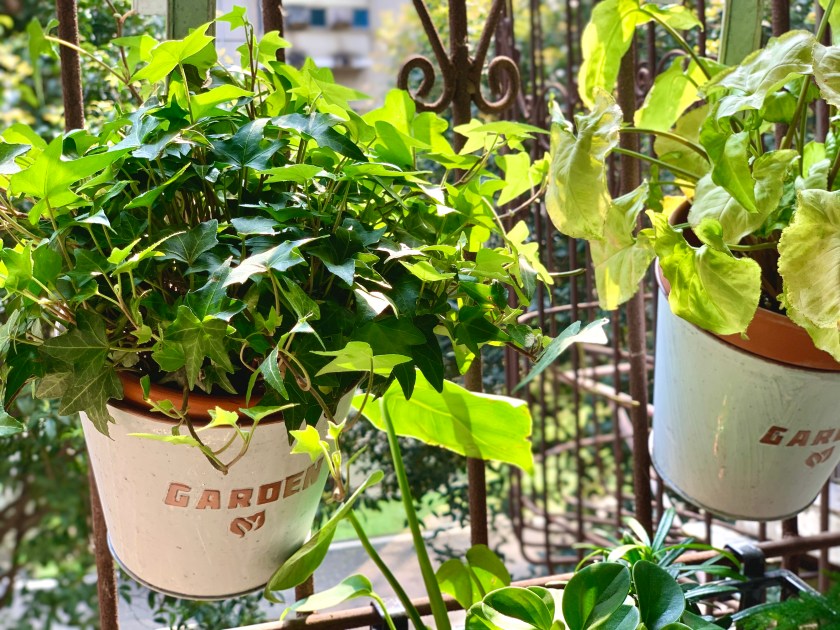
When reading certain type of essays whose function, originally, should have been to inform with carefully checked materials but has now been way more confusing has turned into a tormenting process, I felt an urge to abandon it for good because, if this thing is left disregarded, there would certainly be a series of unquenchable surges of unsettledness and powerlessness that is to catch me, in the end of my day. I should think more of those who are compassionate, kind, regardful, and loving and who would not call our desire to a world, to which kindness, moral seriousness, altruism, and compassion are the passport, unrealistic.
It’s been about a year passed without feeling how warm the sunlight is. As I walk across the roads in one of serial cities to which I relate in Hubei province of Zhongguo(China), it occurs that not a moment has been passed without getting the impression that anything non-human makes more sense to me, from the houseplants I planted on the windowsill of my rented house to the birds that had come before the window to sing a while. I feel thrilled by these beings’ ability to look contented with so little materials they could get.
The sparrows that sometimes came to stay before my window were singing. Outside of the window, the trees whose names I was unable to utter were shining under the sun.
I crossed the road where taller trees with big boughs were dotted and lined sideways, sheltering walkers and bicycles passing by; not afar was the water of a lake waving and glistening in the sunlight as the clouds over us were spreading eastward or so.
‘twas so empty, yet so bright over the lake in the campus of my school. Other passersby beside the lake were watching sideways, picturing the gradual setting of the sun in an ordinary winter afternoon, the only sun we’ve had.
And it’s about time, perhaps, to go on walking for the spring is to come.
By Tome Loulin (Tommy H. Loulin) in Hubei
23rd, March, 2021
This authentic way of telling and showing something that is too hard to be told and presented properly brought a sharper contrast between the romantic imagination and brutal everydayness in actuality, as the story presented by the film is already too tough to experience, let alone review it.
by Tome Loulin
I’m made and remade continually.
Virginia Woolf
Filming is creating ways for us to see something different, familiar, unseen, seen, exotic, and alien in a new sense maybe because for most of us, seeing only one side of something is not enough and film provides us with the opportunity of seeing the world differently. Now, it’s almost ubiquitous to speak of film metaphorically as one of several popular metaphors regarding film goes that every person is the protagonist of their own film; Similarly, that the metaphor that life is a lengthened film is used and accepted so widely suggests we all have a want to feel our life is worth watching, i.e. worth living and the pain we have endured. Unlike literary works that evoke us to imagine a mental world that enriches our real world experiences, visual arts like film present us with a different way of focusing and of paying our attention. Choosing a film to watch is like deciding to pay a very different attention to something that we haven’t been well aware of. Yet, almost every kind of art is focused on our utmost desire to authenticity—what we are and where are we going?
The purpose of creating an involved plot is, perhaps, to make those who expect to discover something that could only be found in film think deeply about the themes that often require more serious attention in order to see the true depth of truth. Most of the films Kechiche directed involve critical inquiries to real life struggles that socially marginalized groups—such as North African immigrants in French society and sexual minorities—have experienced. In Blue Is the Warmest Color (2013), the emotional span of the whole film is extremely broad, giving audience a different sense of reality.
In Blue Is…, Kechiche depicts the emotional and professional apprenticeship of Adèle, a high-school student in Lille who falls in love with older art student Emma. The pair embark on a passionate sexual and domestic partnership, the film tracing its stages from two protagonists’ first encounter to the sublimation of their relationship and from their parting of ways to post-separation reunion, which gives the viewer a touched and engaged experience with a sense of being involved in an alternative reality.
This authentic way of telling and showing something that is too hard to be told and presented properly brought a sharper contrast between the romantic imagination and brutal everydayness in actuality, as the story presented by the film is already too tough to experience, let alone review it.
Tome Loulin
In the film, the focus is put on the irreconcilability and fragility of inter-class communication. It is almost too hard for a film-goer after seeing the film not to absorb the theme that the ordeal of inter-class loving relationship is eternal given that the film’s depiction of an often-overlooked reality is almost as vivid as ever, i.e., the difficulties and social invisibility experienced by sexual minorities and the marginalized.
Speaking of the art of performing, Kechiche’s way of directing is an authentic one if not brutal. In an interview with the Guardian, he was described to ‘delight in bringing untested non-professionals to the screen.’ This faithful, if not radical, realistic way of art making is nothing unheard-of before. Art itself as a profession is about realism at first place. And before the camera was invented, paintings, except for its religious use, were widely made for the purpose of depicting the powerful and upper-class elites. Ordinary people before the age of camera were deprived the right to visual artistic creation. Art history is a history of exclusion because of the great division between the poor and the rich. And of course, the access to artistic creation is not all controlled by the powerful, the well-off, or elites but there did exist some hurdles that obstruct a more inclusive artistic imagination from emerging anew.
From 19th century Russian realism tradition to postmodern reflection on radical modernistic experiments in art, there is certainly a revival of a new taste for realism in artistic creation. Regarding his working-class upbringing, Kechiche, born in Tunis in 1960 but resettled to Nice with his parents at the age of five, reflects “For me the important thing about living there (his flat in Paris’s Arabic area, Belleville) is that it’s a working-class district, it’s the social rather than the ethnic aspect that matters.”
Through his depictions on working class people, we see something unseen but extremely familiar before, which is our innermost authenticity. Life is not about pretention nor is art.
Tome Loulin
The narration of Blue is…, is a lifelike one, and this radical authenticity is further reinforced by a scene depicting Adele, the protagonist with a working-class background, walking alone in the alley, being the final climatical point at the end of the film. This authentic way of telling and showing something that is too hard to be told and presented properly brought a sharper contrast between the romantic imagination and brutal everydayness in actuality, as the story presented by the film is already too tough to experience, let alone review it. Perhaps because people can more or less share this kind of love – the complex feeling that returns and goes away like a lonely self-reploquise, it is also a unique taste of sadness mixed with happiness.
It is not the first time that socially marginalized experiences are depicted and focused by Kechiche. Before Blue is…, there is Couscous(2007) whose subjects deal with old-ages, immigration, and remarriage—all hard ones. It could hardly say that what Kechiche experienced in his childhood as an immigrant in French society doesn’t influence how he interprets about art in general. Through his depictions on working class people, we see something unseen but extremely familiar before, which is our innermost authenticity. Life is not about pretention nor is art.
Kechiche’s imagination about what lens should focus on creates a new way of seeing the unseen. In Philosophical Investigations, Wittgenstein wrote that a mental image is the image which is described when someone describes what he imagines. By imagining radical-authentically, our very ideal of how should our authenticity be defined and presented gives us a new way of describing the experience that we had felt extremely familiar with but rather incompetent to describe accurately. And, of course, our specific way of seeing and imagining what matters to us does matter.
Tome Loulin
Feb 15th 2021
There is something deeper inside of us that is calling, urging us to escape something else; yet, hardly could we find out where and what it is. Something, it’s always the notion of something that is most hard to be named precisely or defined properly, so is our notion of self-liberation, which is hardly an unattractive concept–different people interpret it differently–and has thus gained a lot of philosophical and literary attention seriously.
Virginia Woolf wrote in her book, A Room of One’s Own, that “lock up your libraries if you like; but there is no gate, no lock, no bolt that you can set upon the freedom of my mind.” indicating a sense of insecurity that has been felt throughout times by people who write while at the same time worrying about their restraining circumstances. Fear for the spiritual and artistic creativity being deprived by a lack of material security and of personal privacy still resonates to a large audience today. Many difficulties facing us today are still basic ones–the lack of personal space and financial security.
Many people are still consumed by issues like poverty, abusive upbringing et al., making them hardly able to write about something other than a reflection of what they experienced, out of anger, insecurity, and helplessness.
It’s no good, perhaps nightmarish, to have no choice but to live in a dorm with two other strangers during the first semester of my postgraduate programme, with covid restrictions–unable to move out, having no means to avoid the sense of being envied against, but to endure this, in this dorm, a strange and foreign space. Being forced to live with those unmindful of what you are valuing is like preparing a meal that would certainly be left uneaten–in vain.
It was raining when I stepped out of the bus that carried me to the university. The first time I went to Wuhan in years after the pandemic. Everything, almost, I saw—Xiangzhang trees, tiled roads, and stone railings on the lakefronts in the campus—was getting wet.
I remembered that several months before when I was walking on the road to the dorm with one of the strangers and listening to NPR news podcast, the stranger suddenly said out loud that ‘you learn so hard that I feel pressured.’ For a while, unable to process what I’d heard exactly perhaps because it was too novel a realty to grasp immediately, I replied: “none of your business.” But certainly, this boundary-shaping answer opened the door of an ineffable animosity between me and the person.
Concerning literature, rarely do authors write their unpleasant experiences without proper reasons or contemplation because to write about something means to examine the matter deeper and to tell the truth instead of purely presenting different social phenomena one observed in his/her daily life. To write seems to me like transcending our current understanding about something—something unnameable, never told before—and making the unseen seen and the unheard hearable in an imagined space where things are observed in a thorough fashion. But writers’ commitment to truth-seeking doesn’t mean that absurdities and hostilities observed in human world are not worth serious attention. Instead, to understand certain social phenomena in which serious literary imagination took place has required even more time for writers to process what we thought we know, how can we describe the subject properly and what we tell to readers in general. Perhaps because our society didn’t pay much attention to social-gendering and sexually derived judgements about social norms, many people around me still talk in a way that assumes my personal image is somehow defined by my biological gender, which as the fundamental notion of our social functioning is socially constructed.
It’s no exaggeration to say that heterosexuality has unfeelingly shaped the ways that our society structures and social norms are formed as well. Many languages in the world are gendered ones, making the potential resistance to this linguistic gendering even harder for us to put up with–it’s already occupied our mental world. because of the heterosexual dominance in our social structure-shaping, it’s worth noting that in literary discourse, what has shaped our mind can shape our culture; and there have been many literary works deemed classic helping construct the ethos of an ethnicity and these works are still mostly the ones that reinforce an imagination that many minority groups could hard relate to. No wonder Cao Xueqin, a male writer, would write in his novel Hongloumeng or the Story of the Stones(1791) that the male body is made of mud but the female body of water; this plain heterosexual idealization certainly reflects the writer’s thought about relationship between gender binary and heterosexual dominance. In many ways, our literature world is still dominated by certain forces of gender-derived stereotypes about social minorities whose voices were often left unheard and silenced. Somehow, the current shape of power structure in literary discourse reflects directly that in our society. We are taught to be the member of a society instead of our family now because the way we make us alive has drastically changed. We learn certain ‘useful’ skills through compulsory public education that usually reinforces a preset ideology of gender norms, which often took many years for a person to undo, to fill the social role that is deemed valuable in order to survive. While regarding literature, we hear the voices of the powerful that usually shape ours in order to write, to get fit literally by following these social and cultural standards, to write ‘appropriately’. But independent-mindedness is not getting our society’s approval nor is the purpose of writing. Imagine how hard it would be to describe a same sex relationship in a literary work comparing to a ‘normal’ one and how risky it may seem to write a piece, a serious one, about sexual minority without being judged in a way that rarely has a heterosexual romance writer has been.
The very sense of inequality both in our social survival and in our aesthetic creation could still be felt powerfully in our everyday experiences. One, who as a member of a marginalized group continues to dedicate his/her marginalized experience to the very artistic creation, would certainly encounter the very sense of being constantly judged in a way that rarely had heterosexual or mainstreamed persons understood or wanted to. Their indifference to our untold, unspeakable, and socially silenced sufferings is the most obvious indication of their collective ostracisation–we do not belong.
Being socially excluded in a closed space where escape is hardly an option means to endure a nonverbal cruelty inflicted by a majority group aimed to enforce their values, through the indication of group hatred against perceived outsiders.
Not hearing, not seeing, or not minding anything related to the marginalized group is perhaps the easiest thing to do. What’s not easy for those majorities to do is to not define, label, and name ‘them’ and ‘us’. I am not what ‘he’ sees and thinks. I am, like any mortal beings in this world, undefinable. Why should they think they have the authority to define our identity and have the power to tell us how we should feel about what we feel? Abnormal or normal, mainstream or marginalized, where is the line?
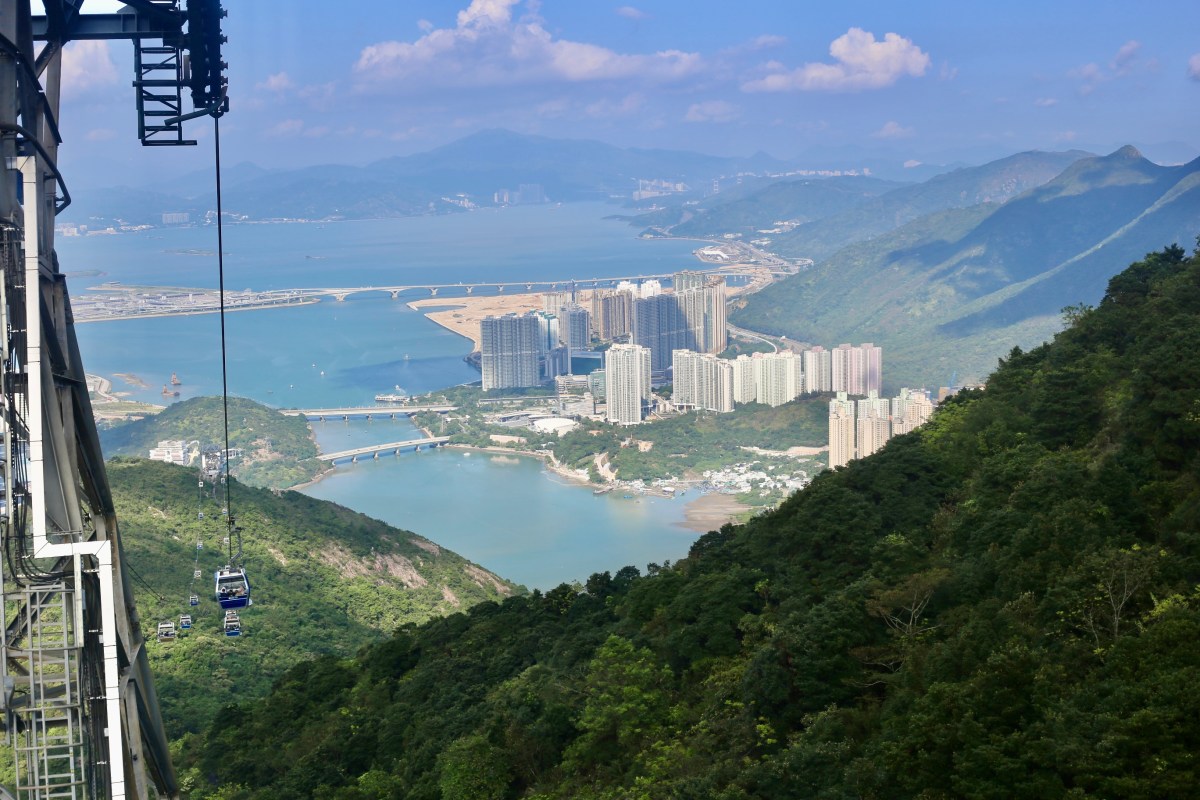
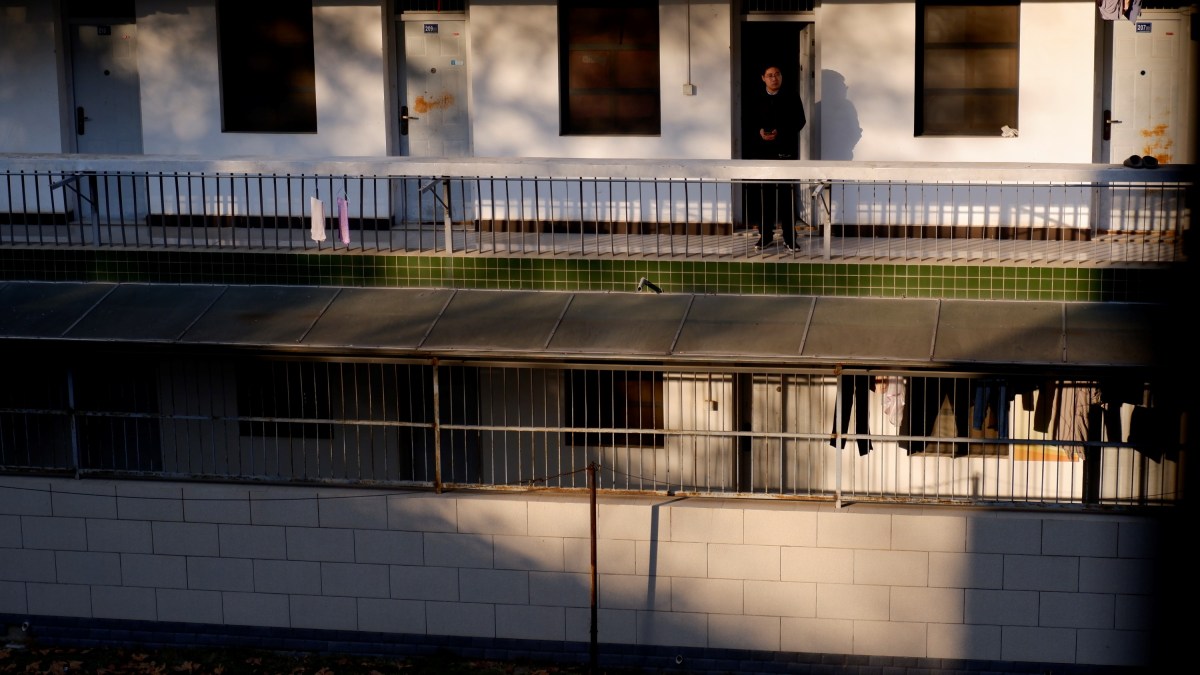
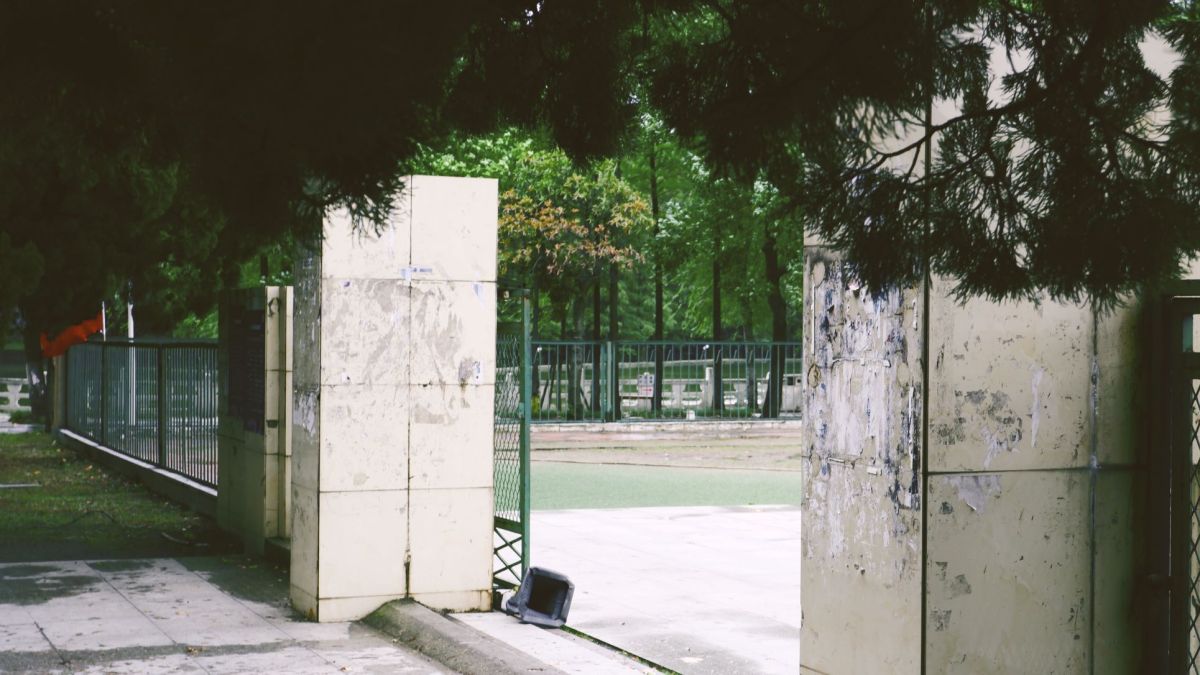

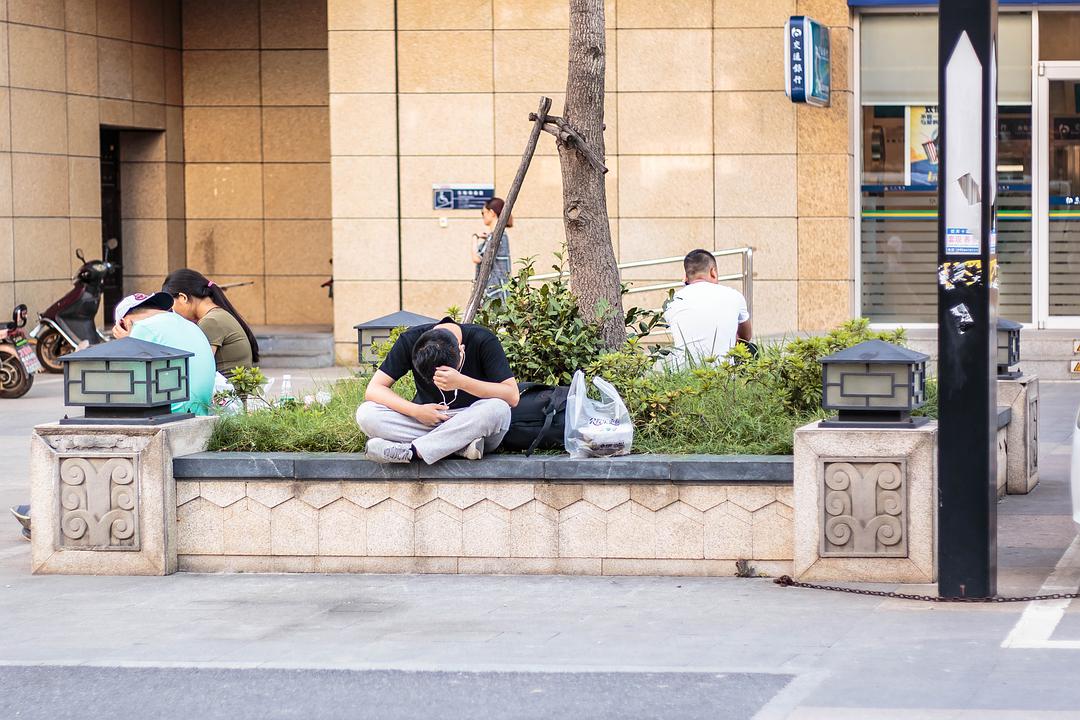
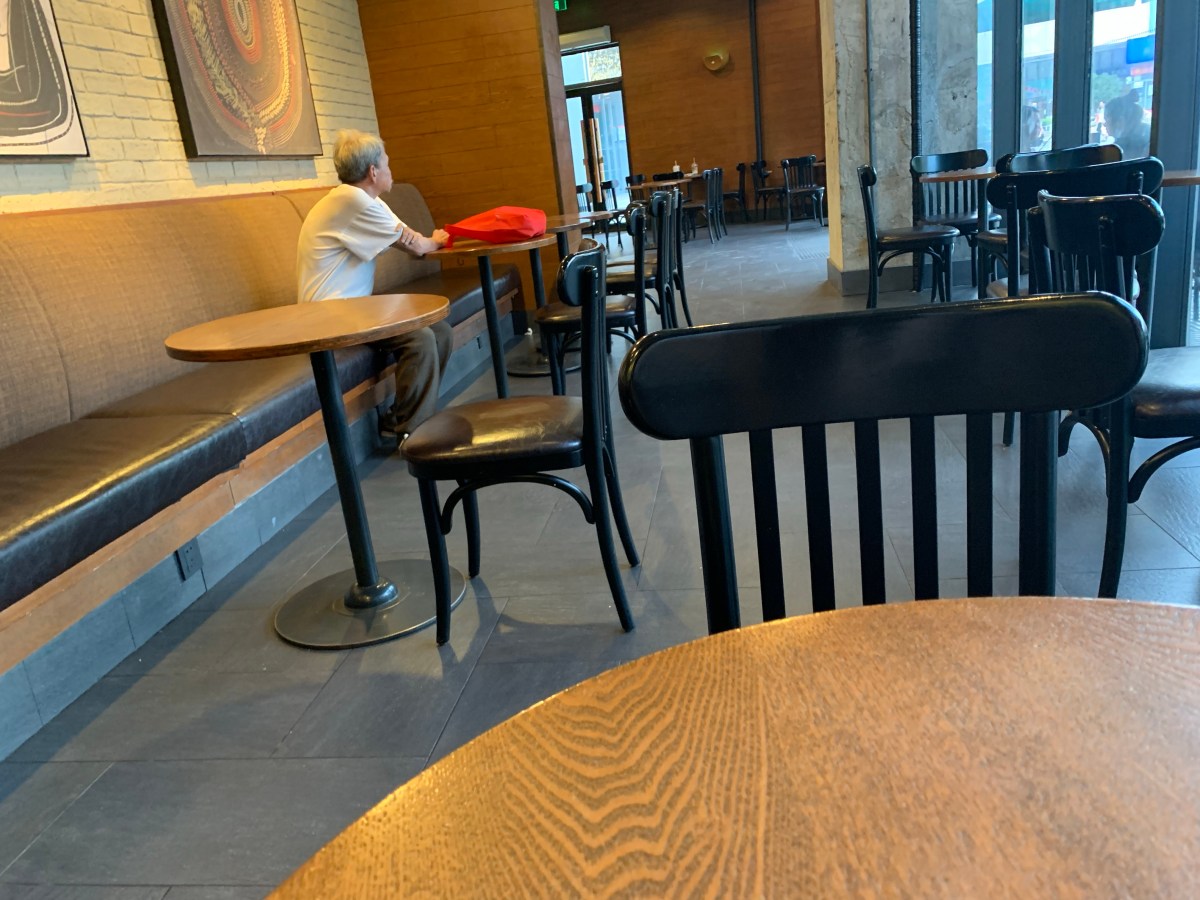

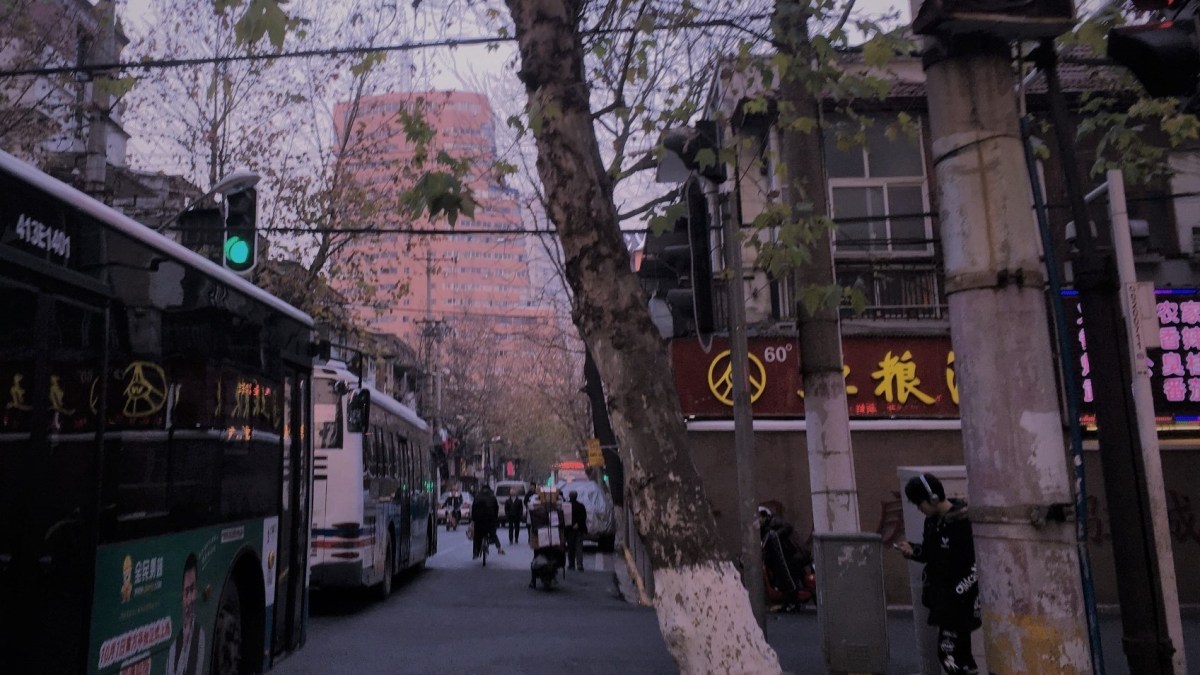
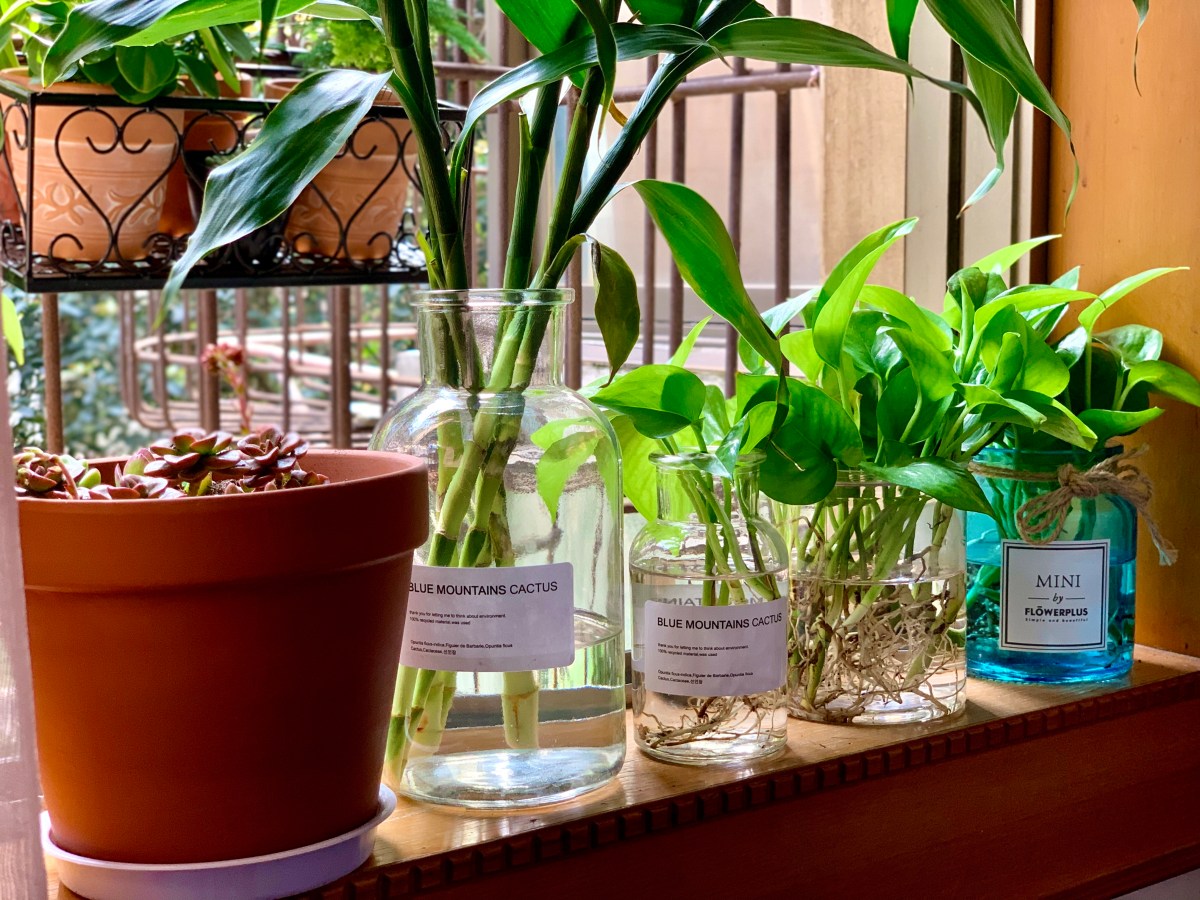

You must be logged in to post a comment.